CBSE’s Skill-Based Learning Mandate for Classes 6–8: A Silent Revolution in Middle School Education
As The Times of India has reported, the Central Board of Secondary Education (CBSE) is preparing to introduce one of the most transformational changes in middle-school education since the implementation of the National Education Policy (NEP) 2020. From the academic year 2026 onwards, Skill Education will become a compulsory subject for students of Classes 6, 7, and 8 across all CBSE-affiliated schools. This change reflects a decisive shift in the way Indian children will learn not merely through textbooks, but through hands-on experience, real-world application, and reflective practice.
For decades, middle school education in India has remained academically rigorous but largely theory-driven. While students have developed strong conceptual foundations, practical exposure to tools, materials, community work, and applied problem-solving has remained limited. CBSE’s new Skill Bodh (Kaushal Bodh) framework seeks to bridge this gap by placing experiential learning at the centre of the classroom.
What Exactly Is Changing?
Under the new mandate, every CBSE school must dedicate 110 hours per academic year, approximately two periods per week, exclusively for structured skill education. This is no longer an enrichment activity or an optional add-on it becomes a compulsory academic subject for all students from Classes 6 to 8.
Each student will complete three structured projects every year, one in each of the following domains:
- Working with Living Beings – involving plants, animals, ecosystems, and environmental awareness
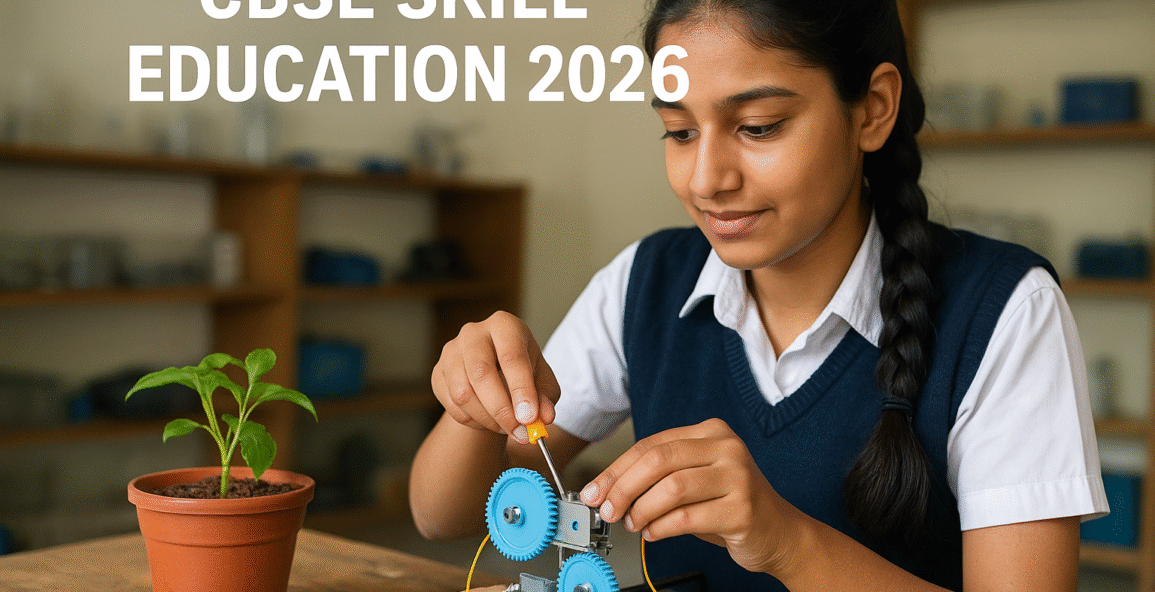
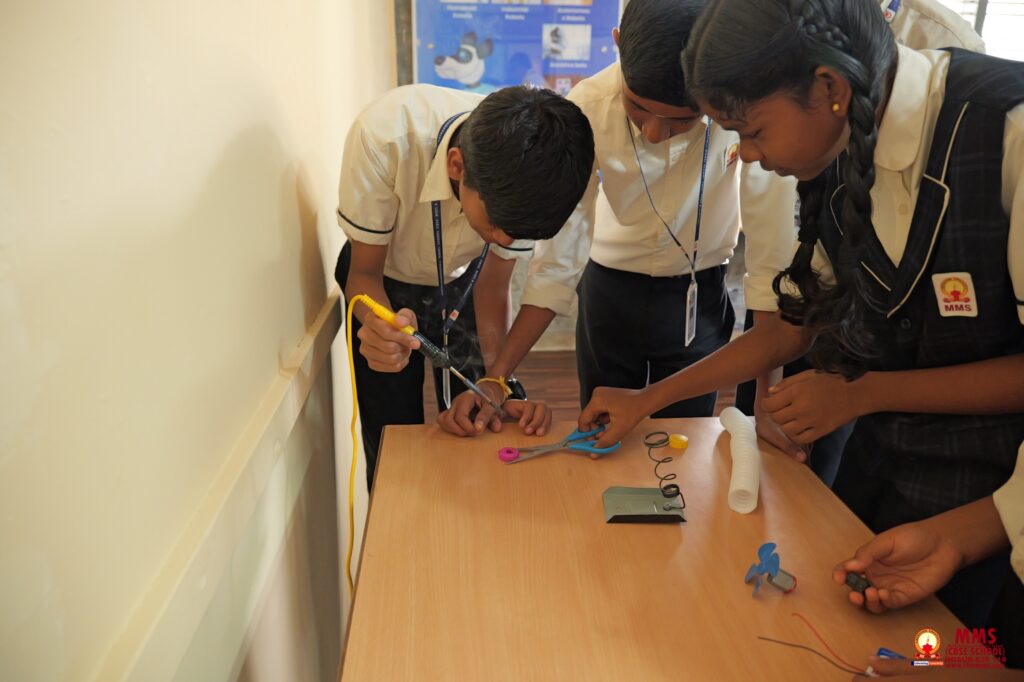
- Working with Materials and Basic Machines – including tools, crafts, repairs, and mechanical basics
- Human Services – focusing on community work, cooperation, social responsibility, and service learning
These projects will be guided by NCERT’s newly developed Skill Bodh textbooks, available in print and digital formats. Unlike conventional textbooks, these books function as process manuals with safety guidelines, step-by-step instructions, reflective prompts, and documentation frameworks.
A Major Shift in Assessment Culture
Along with how students learn, how they are evaluated will also change significantly. Traditional pen-and-paper examinations will no longer dominate assessment. Instead, students will be evaluated through:
- Written tests
- Oral presentations and vivas
- Practical activity records
- Portfolios and reflective journals
- Continuous teacher observation during project execution
This represents a major shift from content memorisation toward process-based evaluation, where effort, creativity, problem-solving, collaboration, and reflection matter as much as correctness.
Why Did CBSE Introduce This Reform?
According to CBSE and NCERT, this reform directly addresses long-standing challenges in Indian schooling. The first is overdependence on rote learning, where students often succeed by recalling rather than applying knowledge. Skill education introduces contextual, hands-on application.
The second is the need for early exposure to real-world skills and careers. Students begin to understand trades, crafts, service work, environmental care, and mechanical processes without the stigma traditionally attached to “vocational” learning.
Third, NEP 2020 calls for equal weightage to academic and vocational skills. This framework operationalises that vision across the entire CBSE system.
What This Means for Schools
The mandate requires substantial organisational and pedagogical changes. Timetables must be reshaped to accommodate continuous skill periods without weakening core subjects. Teachers must be trained to shift from lecture-based instruction to project facilitation, mentoring, safety supervision, and reflective assessment.
Schools are also expected to develop Composite Skill Labs multi-purpose workspaces where students can safely work with tools, plants, materials, and machines. While well-equipped schools may adapt smoothly, many others will face infrastructural and financial challenges. Careful planning and phased implementation will be essential.
The Concerns Parents and Teachers Are Voicing
While the vision is educationally strong, several concerns are emerging. Infrastructure readiness remains a key issue, especially for smaller schools. Many parents fear that projects could become superficial activities without proper equipment or trained staff.
There is also anxiety about increasing academic load, with 110 additional skill hours added annually. If not balanced carefully, students may experience stress.
Another serious challenge is unequal implementation. Urban schools with innovation labs may deliver high-quality skill education, while under-resourced schools may struggle potentially widening the quality gap.
Clarity regarding assessment weightage is also essential. Parents must understand how skill education scores will influence promotion and academic tracking.
Inside the Skill-Education Classroom
Learning inside a skill-education classroom will look very different from a traditional lesson. Students will handle tools, care for plants, work with clay and wood, observe ecosystems, repair basic mechanisms, and participate in structured community service.
They will maintain portfolios and reflective journals, documenting challenges, strategies, outcomes, and learning reflections. These records will strengthen metacognition, responsibility, and self-directed learning.
Skill education does not merely teach “how to do” it teaches how to think through doing.
What Parents Should Do Now
Parents must engage actively with this transition. It is essential to understand how the school plans to implement Skill Bodh, what kinds of materials will be used, whether teachers are undergoing CBSE-certified training, and how student workload will be balanced.
Parents should also encourage curiosity, experimentation, and dignity of labour at home. Skill education works best when families value effort, learning through failure, and hands-on exploration rather than marks alone.
Children may discover new interests in gardening, engineering, social service, design, or repair work interests that textbooks alone would never reveal.
What MMS Is Preparing: Leadership in Action, Not Just Compliance
At Mathakondapalli Model School (MMS), this national transition is not viewed as a sudden directive to be “managed.” It is seen as a natural extension of our long-standing philosophy of experiential, project-based, and child-centric learning. Long before skill education became compulsory, MMS has consciously invested in interdisciplinary work, hands-on projects, and real-world application of classroom learning.
As this reform unfolds, MMS is already moving from policy awareness to system-level preparedness. Our roadmap includes structured teacher upskilling in project facilitation, safety management, documentation practices, and authentic assessment. We are progressively strengthening composite learning spaces where students can safely work with tools, materials, plants, models, and community-linked projects.
At MMS, skill education will not be reduced to activity hours. It will function as a learning culture, where science meets design, mathematics meets application, language meets communication, and social science meets community engagement.
Parents as Co-Educators: A Non-Negotiable Partnership
This reform also redefines the role of parents. Skill education cannot succeed if it is approached like an examination subject alone. Parents must step into the role of co-educators, not merely academic supervisors.
Parental responsibility now includes valuing effort over perfection, encouraging dignity of labour, allowing children to learn through trial and error, supporting projects without converting them into pressure, and recognising growth in confidence, independence, collaboration, and responsibility.
When a child learns to plant, repair, organize, build, serve, or create, the outcome is not just a finished product it is character development in action.
A Strong Leadership Message to Our School Community
As The Times of India has observed, this CBSE mandate is one of the most decisive shifts in middle-school education in recent decades. But policies alone do not transform education people do. It is the clarity of school leadership, the confidence of teachers, and the vision of parents that determine whether reforms become revolutions or routines.
At MMS, our leadership commitment is clear.
We will not treat skill education as a compliance burden.
We will not reduce learning to a checklist.
And we will not prepare children only for exams we will prepare them for life.
The coming years will redefine what learning looks, feels, and functions like in Indian classrooms. MMS stands prepared to walk this path with discipline, depth, and unwavering academic purpose. We invite our parents, teachers, and students to walk with us not as observers of change, but as active partners in shaping capable, confident, and responsible future citizens. This is not merely a curriculum reform.
This is a generational responsibility.
ERTD