
From Classroom to Car Engine: MMS Students Master Real-World Automotive Skills
Hands-On Learning Experience in Automobile Lab
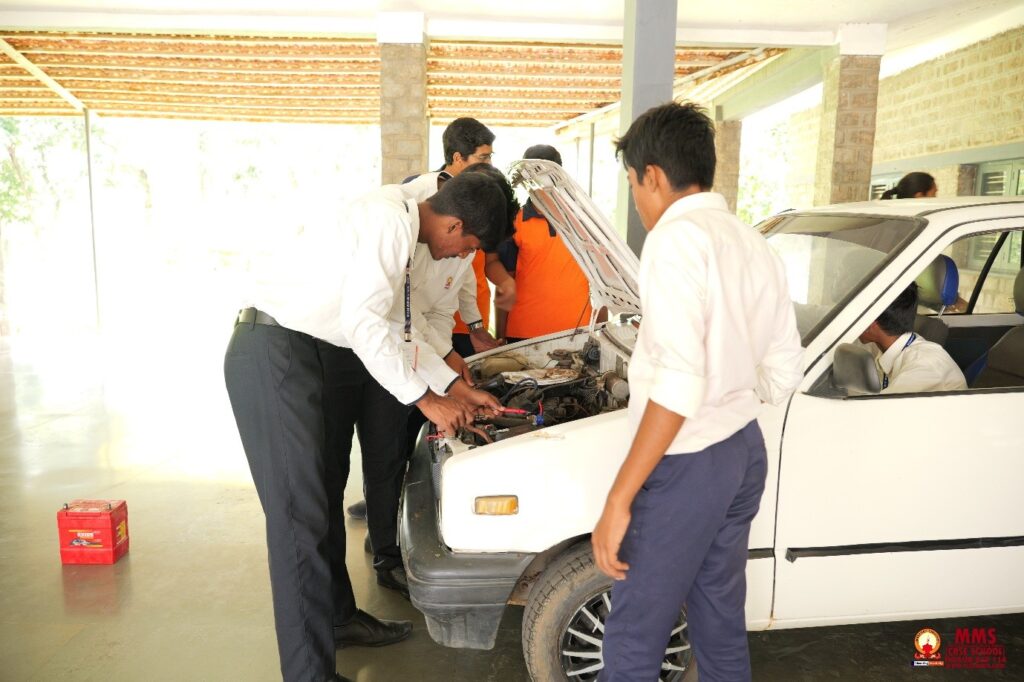
In an engaging and practical learning initiative at MMS Hosur, students from Standards 9 and 11 recently participated in a comprehensive automotive education session conducted in the school’s Automobile Lab. The session was led by the school’s transport manager, who shared valuable insights into the mechanics and operation of a Maruti 800 automobile.
Real-World Automotive Knowledge
The transport manager, drawing from years of practical experience in vehicle operation and maintenance, guided students through the essential aspects of automotive technology. This experiential approach provided students with real-world knowledge that goes beyond textbook learning.
The session created an atmosphere of curiosity and discovery, where students actively participated in understanding every component of the vehicle. From examining the engine’s internal mechanisms to understanding the importance of regular maintenance schedules, the transport manager ensured that each concept was explained thoroughly with practical demonstrations.
“I never knew oil actually cools the engine I thought it just made things slippery!” shared Priya, a Standard 9 student, capturing the excitement of discovery that filled the lab. Another student, Arjun from Standard 11, added, “Learning to diagnose circuit problems using the dashboard lights was amazing. Now I can help my dad when warning lights appear in our car.”
Students were encouraged to ask questions and clarify doubts, making the learning experience truly interactive and memorable.
Key Learning Areas Covered
Starting the Vehicle
Students learned the proper step-by-step procedure for starting a car, from pre-ignition checks to the actual starting process. The transport manager demonstrated the importance of checking the gear position, engaging the clutch, and understanding the ignition sequence before starting the vehicle.
Circuit System
The electrical circuit system was explained in detail, covering the battery, alternator, fuses, and wiring networks. Students learned how to identify common electrical issues, understand the dashboard warning lights, and recognize signs of circuit problems. The transport manager demonstrated how to check connections and troubleshoot basic electrical faults.
Oil Circulation System
One of the most critical aspects covered was the engine’s oil circulation system. The transport manager explained how engine oil flows through the oil pump, filters, and various engine components. Students learned about:
- The role of engine oil in lubrication and cooling
- How to check oil levels properly
- Understanding oil viscosity and grades
- Recognizing signs of oil-related problems
- The importance of timely oil changes
Safety of the Car
Safety was given paramount importance during the session. The transport manager emphasized:
- Proper use of seatbelts and their mechanism
- Brake system operation and warning signs
- Tire pressure and tread depth checks
- Checking mirrors and blind spots
- Understanding vehicle stability and safe driving practices
- Emergency procedures and breakdown protocols
- First-aid kit and safety equipment location
Vehicle Maintenance
Practical maintenance knowledge was shared, including:
- Daily and weekly inspection routines
- Checking and topping up fluids (coolant, brake fluid, windshield washer)
- Battery maintenance and terminal cleaning
- Air filter inspection and replacement
- Tire rotation and alignment importance
- Identifying unusual sounds or vibrations
- Keeping maintenance records
- Understanding service schedules
The Automobile Lab Setting
The school’s Automobile Lab provided an excellent environment for this practical learning session. This innovative approach to education represents future technology in teaching, where students become student innovators through interactive learning experiences.
Echoing our commitment to skill-based laboratories and forward-looking initiatives like E-vehicle projects, the lab exemplifies how MMS Hosur transforms theoretical concepts into tangible skills. The transport manager used the Maruti 800 to demonstrate various components and systems, allowing students to see, touch, and understand the actual parts rather than just viewing diagrams or images.
The choice of the Maruti 800 was particularly appropriate, as this reliable and straightforward vehicle design makes it an excellent teaching tool for understanding fundamental automotive principles that apply to all vehicles.
Expert-Led Learning Experience
Having the school’s transport manager conduct this session added immense value to the learning experience. His practical expertise, gained from maintaining and operating school vehicles daily, provided students with insights that only come from real-world experience. He shared common problems he encounters, practical solutions, and preventive measures that keep vehicles running safely and efficiently.
The transport manager’s patient teaching style and willingness to demonstrate procedures multiple times ensured that even complex concepts became accessible to all students. His anecdotes from years of experience handling various vehicle issues made the session both educational and engaging, helping students understand the real-world applications of automotive knowledge.
Student Engagement and Practical Skills
This smart learning approach significantly enhanced student engagement through experiential learning methods. Students could ask questions based on their observations, handle tools, examine components, and understand the logic behind maintenance procedures. This practical exposure bridges the gap between theoretical knowledge and real-world application, preparing tech-savvy students for 21st century learning challenges.
The session also included discussions about:
- Road safety and responsible vehicle use
- Environmental aspects of vehicle maintenance
- Career opportunities in the automotive sector
- The importance of technical skills in daily life
Benefits Beyond the Classroom
This initiative provides students with life skills that extend beyond academic learning. Understanding how vehicles work, basic troubleshooting, and maintenance awareness are valuable skills that students will use throughout their lives. The knowledge also promotes:
- Self-reliance and problem-solving abilities
- Safety consciousness
- Respect for machinery and equipment
- Understanding of mechanical systems
- Career awareness in technical fields
MMS Commitment to Holistic Education
Aligning with NEP 2020’s emphasis on vocational education integration from secondary levels, this automotive technology learning session demonstrates MMS Hosur’s commitment to providing comprehensive education that combines academic knowledge with practical life skills.
By utilizing school resources like the transport manager’s expertise and the Automobile Lab facility, the school ensures that students receive well-rounded education preparing them for real-world challenges. This tech-in-education approach creates an engaging digital classroom experience that goes beyond traditional teaching methods.
The success of this learning experience has been well-received by both students and faculty, opening possibilities for similar practical sessions in other areas of study.
R Gagana Sri
MM School