Standing in front of my students each day, I am reminded of a quiet truth that every teacher carries in their heart we are preparing children for a future we cannot fully predict. The world they will step into will not only demand knowledge, but courage, adaptability, digital fluency, and the confidence to keep learning in the face of constant change. In this fast-evolving world, my role as a Computer Science teacher extends far beyond teaching software, coding, or theory. I am teaching children how to think, how to question, how to explore, and how to become independent learners. Because the future does not belong to those who know the most it belongs to those who can keep learning.
Teaching Beyond the Curriculum — Teaching for Life
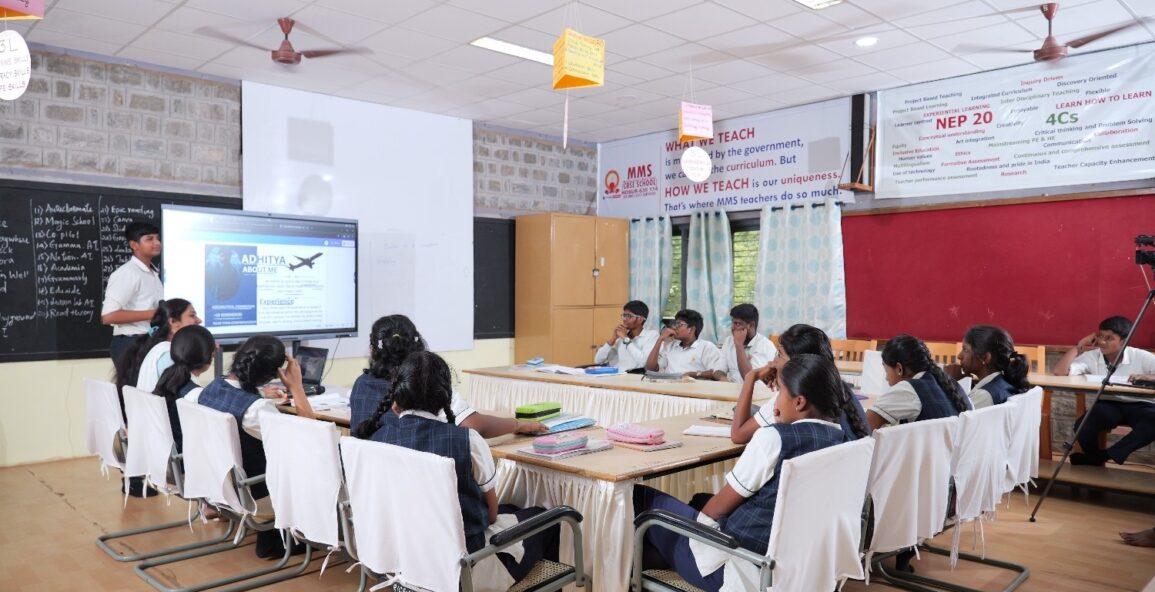
This year, my classroom transformed into a space of exploration, innovation, and problem-solving. The projects were not just assignments on paper; they were real-world learning experiences with true purpose.
Grade 12 Commerce + Grade 10 Integration: A Teacher-Friendly Attendance System
This was not a typical classroom task. It was purposeful innovation. Students collaborated across grades to design a fully functional, Excel-based attendance system for teachers to use daily. Through this experience, they developed:
• Problem-solving and logical thinking
• Cross-grade collaboration
• User-centred design
• Time-saving automation
• Professional responsibility
For the first time, many students experienced the pride of creating something that genuinely served their school community.
Grade 10: Resume Building — A Step Toward the Future
As students created their first resumes, I noticed a shift not just in skills, but in mindset. It was no longer just an activity about formatting; it became an act of self-discovery.
They began to ask themselves:
• “Who am I becoming?”
• “What have I achieved?”
• “What do I want my future to look like?”
This simple but powerful task encouraged self-awareness, vision, and early career thinking in young minds.
Grade 10: Exploring Cybersecurity — From Curiosity to Responsibility
Out-of-the-box thinking emerged when two Grade 10 students developed a strong interest in understanding cyber threats, cybersecurity, and ethical (white-hat) hacking through our chapters on Cyber Threats and Internet Safety.
Instead of restricting themselves to textbook learning, they took the initiative to explore how cyber-attacks occur and more importantly, how they can be prevented. Inspired by the idea of becoming ethical cybersecurity professionals in the future, they wanted to use their learning for a meaningful purpose.
Recognising their curiosity and sense of responsibility, I guided them to transform their knowledge into awareness for their juniors. They prepared and delivered a seminar for lower-grade students on:
• Common cyber threats faced by students
• Safe and responsible internet practices
• Strong password creation and data protection
• The role of ethical hackers in protecting people and systems
The session was highly impactful. It strengthened cyber safety awareness among junior students and helped the presenters grow in confidence, leadership, and communication skills.
Through this experience, students understood a powerful lesson:
Cybersecurity is not about breaking systems it is about protecting people, data and the digital world.
Why These Experiences Truly Matter
The future is uncertain.
Technology will change.
Jobs will evolve.
Challenges will rise.
But the ability to learn, unlearn and relearn will always remain essential.
Through every project and experience, I strive to build in my students:
• Confidence to ask questions
• Courage to experiment and fail
• Discipline to explore independently
• Curiosity that drives discovery
• Strength to solve problems without ready-made answers
I often remind them:
“I am not just teaching you computers. I am teaching you how to be learners now and for the rest of your life.”
Because self-learners never become outdated.
The Heart of My Teaching – Empowering Young Minds
When I see my students analysing data, creating systems for teachers, presenting cybersecurity awareness, building their first resumes, or thinking like AI. I see more than technical skills.
I see:
• Resilience being formed
• Identity taking shape
• Confidence growing
• The future finding its direction
My classroom is not just a computer lab. It is a space where students learn:
• How to think in uncertainty
• How to remain curious
• How to adapt to change
• How to lead their own learning
• How to step into the world with courage and clarity
And that, to me, is the greatest responsibility and privilege of being a teacher today.
A Promise to My Students
As long as they walk into my classroom, I will continue to challenge, encourage, support and believe in them. I will give them real-life experiences, meaningful projects and opportunities that shape both their minds and hearts.
I will continue guiding them to become confident, creative, ethical self-learners ready for a world that keeps changing, because they know how to change with it.
Conclusion — The True Impact of Education
If our children learn how to think, how to adapt, and how to trust their own ability to learn, then we have already given them the greatest preparation for any future that awaits them.
Because learning is not just a lesson.
It is a lifelong journey.
And I am honoured to walk with them as they begin theirs.
Nithya Varatharajan,
Dept of Computer Science