Grades 6 to 8: Middle School Learning – The Crucial Transition from Foundational to Conceptual Understanding
Understanding the Middle School Years: A Critical Educational Phase
The middle school years Grades Six to Eight represent one of the most significant transitions in a learner’s academic journey. This critical stage marks a shift from basic knowledge acquisition to structured thinking, conceptual depth, and application-oriented learning in middle school education. Students are no longer passive recipients of information; instead, they develop critical thinking skills through observation, questioning, reasoning, and articulating ideas with increasing independence.
Across disciplines, the middle school curriculum intentionally moves away from rote memorization toward analytical engagement, hands-on experimentation, and creative expression. This educational transformation is particularly evident in STEM education (science and mathematics), social studies learning, and language development, where the nature of learning itself undergoes a fundamental change aligned with adolescent cognitive development.
Science Education in Middle School: From Definitions to Experimentation and Scientific Inquiry
In the early grades, science learning is largely descriptive. Elementary students learn to identify plants, animals, materials, and basic physical phenomena through definitions and examples. However, in Grades Six to Eight, science education evolves into an investigative discipline focused on inquiry-based science learning. Scientific concepts are no longer presented as fixed truths to be memorized; instead, middle school students are encouraged to explore how scientific knowledge is generated through the scientific method.
Building Scientific Thinking Skills Through Hands-On Learning
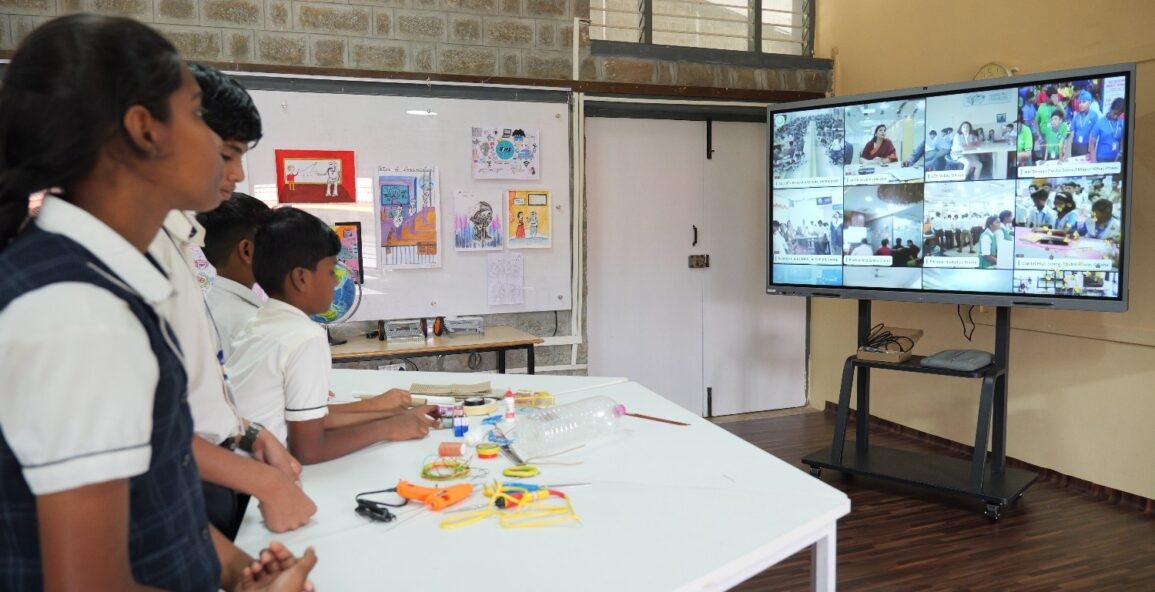
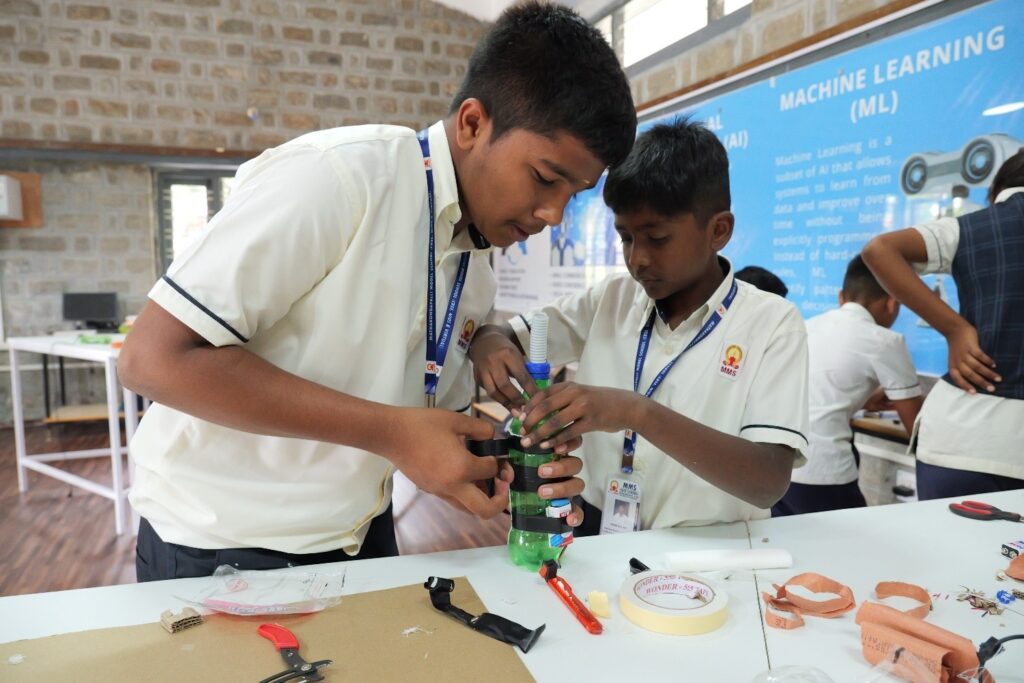
At this stage, learners begin to engage with experimentation, systematic observation, hypothesis formation, and data interpretation core components of STEM education. Laboratory activities, field observations, and simple science investigations become central to instruction. For example, rather than merely defining photosynthesis, students examine the conditions required for it to occur through experiments. Instead of memorizing Newton’s laws of motion, they observe motion, measure variables, and infer relationships through practical activities.
This transition cultivates scientific temper an essential objective of contemporary middle school education. Students learn that scientific knowledge is evidence-based, testable, and open to revision. They begin to distinguish between observation and inference, cause and correlation, and fact and assumption through critical thinking exercises.
Importantly, science learning now emphasizes process skills such as analytical thinking, collaboration, documentation, and ethical reasoning. These competency-based learning skills lay the groundwork for higher secondary science education and foster lifelong inquiry skills essential for 21st-century learning.
Mathematics in Middle School: From Numbers to Logic, Problem-Solving, and Real-World Application
Mathematics in the primary years focuses primarily on numerical fluency counting, basic operations, and simple problem-solving. While these foundational math skills remain important, Grades Six to Eight mark a decisive shift toward logical reasoning, abstract thinking, and mathematical reasoning. Middle school mathematics becomes less about arriving at an answer and more about understanding why that answer is valid.
Developing Mathematical Thinking and Problem-Solving Skills
Students are introduced to algebraic thinking, proportional reasoning, geometry concepts, data handling, and elementary statistics key components of middle school math curriculum. Concepts such as variables, equations, ratios, and graphs demand logical structuring and pattern recognition. Learners are encouraged to justify their mathematical methods, compare multiple solution strategies, and identify errors in reasoning through reflective practice.
Crucially, mathematics education at this level is increasingly connected to real-world math applications. Problems are framed around practical situations distance and speed calculations, profit and loss scenarios, measurement activities, and data interpretation exercises. This application-oriented approach helps students appreciate mathematics as a problem-solving tool rather than an isolated academic exercise.
The emphasis on mathematical reasoning strengthens cognitive flexibility and academic perseverance. Students learn to approach complex problems systematically, break them into manageable components, and reflect on their solutions. These habits of mind are essential not only for advanced mathematics but also for scientific reasoning, economics, technology literacy, and everyday decision-making skills.
Social Studies in Middle School: From Events to Causes, Consequences, and Critical Analysis
In the early grades, social science often focuses on familiar surroundings and basic historical narratives. Elementary students learn about communities, national symbols, and major historical figures through simplified accounts. By Grades Six to Eight, the subject expands both in scope and depth, demanding more analytical engagement with society, history education, geography skills, and civics education.
Developing Historical Thinking and Civic Awareness
History education moves beyond chronological narration to an exploration of historical causes and effects, consequences, and multiple perspectives. Middle school students examine why historical events occurred, how they affected different groups, and what long-term impacts they had on societies. This approach discourages rote memorization of dates and names and encourages interpretative and critical thinking in social studies.
Geography education introduces students to spatial analysis, human-environment interactions, and resource distribution patterns. Learners analyze maps, climatic patterns, population trends, and economic activities, linking physical geography with human decision-making. Civics education, meanwhile, focuses on governance systems, rights and responsibilities, and democratic processes, helping students understand their role as informed and responsible citizens.
This analytical orientation develops historical thinking skills, civic awareness, and social responsibility. Students learn to question sources, recognize bias in information, and appreciate diversity of viewpoints. Social studies thus becomes a powerful medium for cultivating ethical reasoning, empathy development, and informed participation in democratic society.
Language Arts in Middle School: From Communication to Expression, Critical Reading, and Original Ideas
Language learning in the primary years primarily aims at basic literacy reading fluency, vocabulary acquisition, and simple writing skills. In Grades Six to Eight, language development evolves into a tool for expression, interpretation, and original thought. Middle school students are expected not only to comprehend texts but also to analyze literature, critique arguments, and respond thoughtfully to diverse perspectives.
Strengthening Communication Skills and Literary Analysis
Reading materials now include diverse genres such as short stories, essays, poetry analysis, biographies, and informational texts. Students explore literary themes, character motivations, authorial intent, and literary devices through close reading strategies. Writing tasks extend beyond sentence construction to include structured paragraphs, persuasive essays, narrative writing, and reflective pieces that demonstrate higher-order thinking.
Oral communication skills also gain importance in middle school language arts. Class discussions, debates, presentations, and collaborative learning tasks encourage students to articulate ideas clearly and confidently. Language becomes a medium through which students express opinions, construct logical arguments, and engage with complex ideas across all subject areas.
This transformation supports cognitive and emotional development in adolescence. Through language arts education, students learn to organize thoughts, reflect on experiences, and connect learning across disciplines. Strong communication and literacy skills at this stage significantly enhance academic performance in all subjects and prepare students for advanced studies and effective self-expression.
Conclusion: Building the Foundation for Lifelong Learning and Academic Success
Grades Six to Eight form the intellectual bridge between foundational elementary learning and specialized secondary education. The shift from definitions to experimentation, from numbers to logic, from events to analysis, and from communication to expression reflects a deliberate pedagogical intent in middle school education design.
Education at this critical stage is not merely about syllabus coverage; it is about shaping critical thinkers, creative problem-solvers, and responsible individuals prepared for high school and beyond. When taught effectively through student-centered learning approaches, this phase equips students with essential skills: critical thinking abilities, conceptual clarity, and expressive confidence.
Preparing Students for Future Success
This transformative period fosters curiosity, academic resilience, and ethical awareness qualities essential for success in higher education, career readiness, and lifelong learning. Recognizing the importance of this educational transition allows schools to design engaging learning experiences that are meaningful, developmentally appropriate, and aligned with the cognitive and emotional needs of adolescents.
Ultimately, Grades Six to Eight do not merely prepare students for standardized examinations; they prepare them for understanding the world and their place within it as informed, capable, and confident young adults.
ERTDU