Vision Boards for 2026: Nurturing Purpose, Positivity, and Goal-Oriented Learning in Grade 8
“What the mind can conceive and believe, it can achieve.” — Napoleon Hill
This idea formed the foundation of the Vision Board activity, inviting students to visualize their aspirations and consciously plan the steps needed to turn those aspirations into reality
Introduction
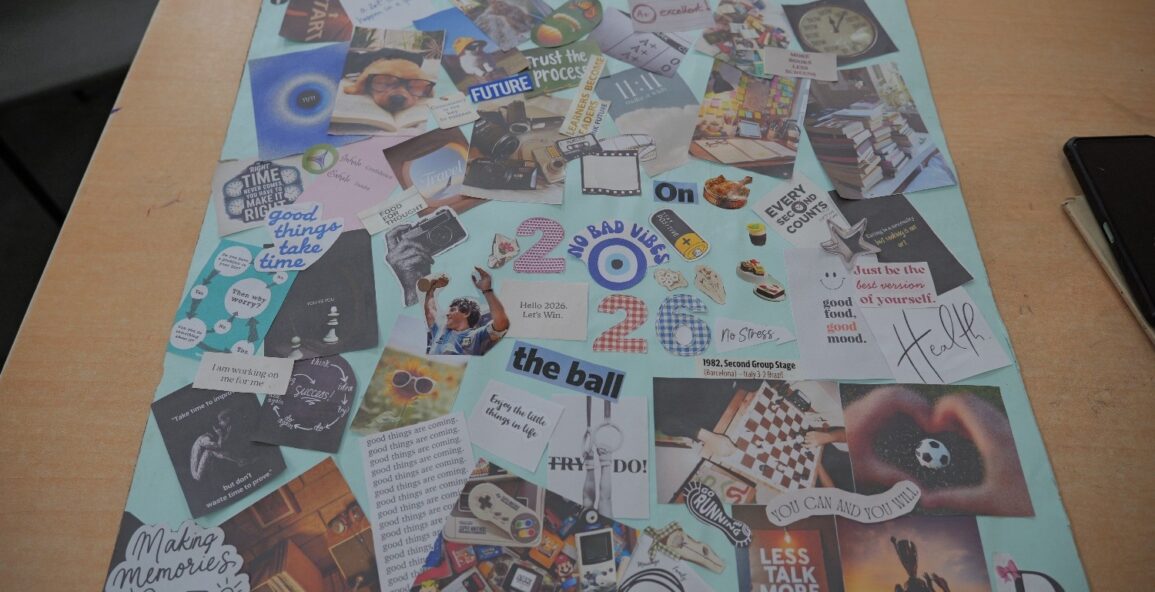
To empower students to begin the year 2026 with clarity, confidence, and purpose, Grade 8 students participated in a reflective and creative learning experience: designing a Vision Board for 2026. The activity encouraged learners to think beyond textbooks, reflect on their aspirations, and visually map their personal, academic, and emotional goals. More than an art task, it became a meaningful exercise in self-awareness, intention, and goal-oriented thinking.
What Is a Vision Board?
A vision board is a visual representation of an individual’s goals, dreams, and aspirations, created using images, words, affirmations, symbols, and drawings.
For Grade 8 students, the vision board functioned as:
- A space to express goals related to academics, skills, health, relationships, and values
- A tool to convert abstract dreams into visible, concrete intentions
- A creative platform that blends imagination with purposeful planning
Through this process, students were guided to reflect on a key question:
“What kind of learner and individual do I want to become in 2026?”
The Psychological Aspect Behind Vision Boards
Vision boards are supported by principles from positive psychology and goal-setting theory.
- Visualization and Focus: The brain responds strongly to images. Repeated visual exposure to goals strengthens focus, motivation, and self-belief.
- Goal Clarity and Ownership: By visualizing specific goals, students move from vague wishes to clear intentions, fostering self-regulation and responsibility.
- Emotional Well-being: Reflecting on aspirations and values promotes optimism, reduces anxiety about the future, and builds emotional confidence.
Together, these elements support both academic engagement and psychological well-being
How the Vision Board Activity Supported Student Growth
The vision board activity brought about visible changes in students’ mindset, motivation, and approach toward learning and personal development.
- From Passive Thinking to Active Planning: Students began identifying concrete habits, skills, and character traits they wished to develop, shifting from hoping for success to planning for it.
- Increased Motivation and Responsibility: Self-chosen goals displayed visually encouraged consistency, discipline, and a sense of ownership over learning.
- Enhanced Self-Awareness: Students reflected on strengths, weaknesses, and areas for improvement, recognising the importance of both acquiring new skills and strengthening existing ones.
- Peer Learning and Communication: Sharing vision boards helped students articulate aspirations confidently, respect diverse goals, and learn from one another.
- Emotional and Psychological Growth: The activity nurtured confidence, optimism, and a sense of control over one’s choices and future.
Overall, the activity transformed goal setting into a student-driven, reflective process, fostering personal accountability and a growth mindset.
Student Voices: Reflections from Grade 8A
All shared reflections and student names are included with appropriate permission and consent.
Rohit Krishnan (Grade 8A) shared:
“I personally felt that even at the beginning of the year, I have clear visions and plans to achieve my goals. My vision board gives me warm guidance, like a GPS guiding me toward my dreams.”
Jethro Manuel (Grade 8A) reflected:
“While preparing my vision board, I realised that many things need to be fixed for the new year 2026. The activity helped me understand my strengths and weaknesses.”
Sundhar Shanmukh (Grade 8A) expressed:
“During the preparation, I realised that I not only want to develop new skills, but also need to improve the skills I already have. The vision board helped me understand the importance of character building and a healthy lifestyle.”
These reflections demonstrate meaningful introspection, clarity of thought, and emotional maturity key outcomes of purposeful education.
Facilitator’s Note
As the facilitator, my intention was to help students begin 2026 with a strong sense of direction and self-belief. The activity encouraged students to pause, introspect, and recognise that goals are achieved through awareness, intentional thinking, and consistent effort.
The vision board served as a gentle yet powerful reminder that when the mind is clear, the path forward becomes visible.
Learning Beyond the Classroom
Though not designed as a policy-driven exercise, the activity naturally aligned with contemporary educational thinking. By promoting reflection, creativity, emotional awareness, and real-life goal setting, students engaged cognitively, emotionally, and socially moving beyond rote learning toward holistic development.
Conclusion
The Vision Board for 2026 activity was more than a classroom assignment; it was a journey of self-discovery. Through creativity, psychology, and reflection, students learned to visualise their goals, build confidence, and take responsibility for their growth.
Such experiences reflect the spirit of modern education, where learners are active participants in shaping their future. Parents are encouraged to explore vision board activities at home as well, to further support and reinforce their child’s aspirations and personal journey.
When students can see their dreams clearly, they are far more likely to work steadily toward achieving them.
Sivaraj V
Facilitator of English, MMS