CBSE’s Skill-Based Education for Classes 6 to 8: A Necessary Shift, Not an Option
From the academic year 2026, CBSE has made skill education compulsory for Classes 6, 7 and 8. This is not a cosmetic reform. It is a structural correction to a school system that has been over-dependent on textbooks, memory-based assessments and passive classroom engagement for decades. Introduced through NCERT’s Skill Bodh curriculum, this framework directly operationalises the vision of NEP 2020 inside everyday classrooms.
For the first time, skill education is no longer treated as an extracurricular activity or an optional enrichment. It is now a mandatory subject with dedicated teaching hours, structured projects and formal assessment. Schools must allocate 110 hours annually for skill education. This itself signals a philosophical shift. Skills are no longer secondary to academics. They are academics.
Students will now engage in real-world domains involving living beings, materials and machines, and human services. This choice of domains is not accidental. These are the three fundamental ways through which human civilisation functions—environment, production and service. CBSE is clearly stating that education must connect children with life, not just with examination syllabi.
Assessment has also been deliberately restructured. Written tests alone will no longer define learning. Students will be assessed through activities, portfolios, presentations, reflection journals and real-time classroom observation. This change directly challenges the deeply ingrained exam-centric mindset that dominates Indian schooling. The message is clear: learning is a process, not a performance.
The strongest justification for this reform lies in the visible limitations of rote-based education. Students memorise content, reproduce it in exams and forget it soon after. This cycle produces marks, not mastery. Skill education interrupts this cycle by forcing students to think, build, observe, fail, correct and reflect. These are the habits that real learning demands.
Early exposure to skill domains is equally significant. Children will now understand plant care, environmental responsibility, basic mechanical processes, craftwork, community service and teamwork at an impressionable age. This removes the artificial hierarchy between academic intelligence and practical intelligence that has damaged India’s workforce for generations.
This reform also settles an important ideological debate. NEP 2020 repeatedly argued that vocational and academic learning must carry equal dignity. For years, that idea remained only in policy documents. The Skill Bodh mandate finally pushes it into classroom reality.
However, the success of this reform will not be determined by circulars. It will be determined by infrastructure, teacher preparedness and realistic implementation. Schools now face the challenge of restructuring time tables, establishing composite skill labs and preparing teachers for mentoring-based pedagogy rather than lecture-based teaching.
Teacher transition will be the most demanding shift. Skill education does not function through chalk-and-board instruction. It requires supervision, safety protocols, facilitation, observation-based assessment and reflective feedback. Many teachers will need sustained professional development to grow into this role.
Infrastructure inequality also remains a serious concern. Well-resourced urban schools may deliver high-quality skill education through makerspaces and labs. Rural and low-budget schools may struggle for materials, spaces and trained manpower. If not addressed through policy-level financial support, this gap could widen educational inequality instead of reducing it.
Another legitimate concern is academic load. Middle-school students already function under packed schedules filled with tuition, homework and exams. An additional 110 hours of structured skill education will demand serious time-management reforms. If blindly added without restructuring priorities, it can cause fatigue rather than enrichment.
Parents also deserve clarity on evaluation. Skill education scores must be transparently integrated into promotion criteria and internal assessment. Without clearly defined weightage, uncertainty will only breed anxiety and resistance.
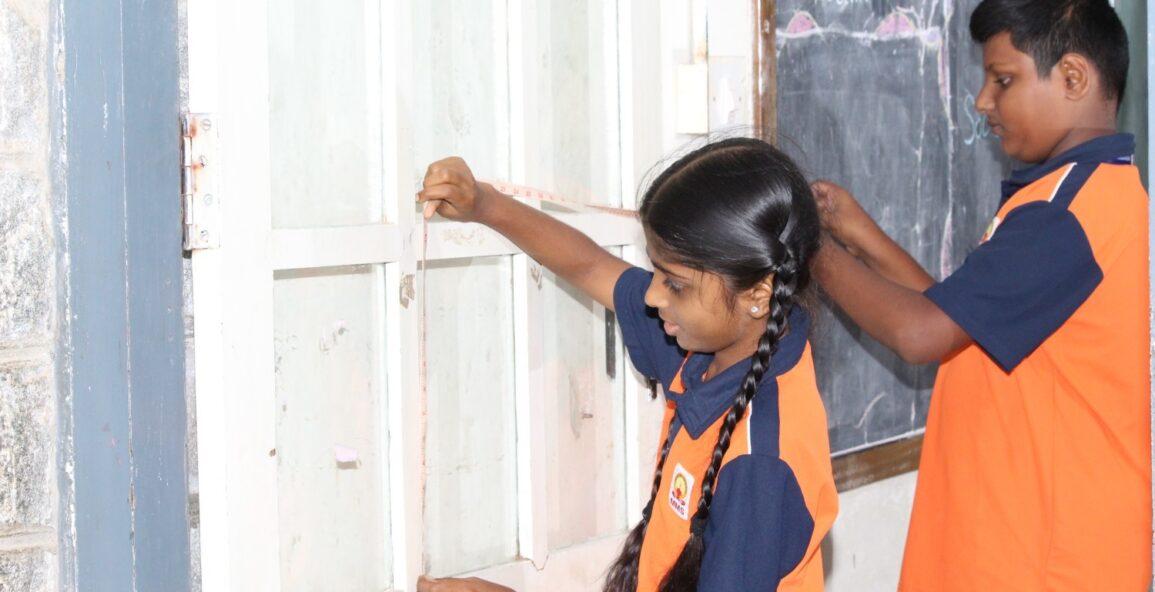
Inside the classroom, however, the learning experience promises to be radically different. Students will use tools, build objects, observe ecosystems, engage in community service and document their growth through portfolios. They will no longer be passive note-takers. They will become active participants in their own learning journey.
Reflection plays a critical role in this model. Students are encouraged to write, evaluate their work, and understand where they succeeded and failed. This nurtures metacognition, responsibility and self-awareness—qualities that conventional examination systems rarely cultivate.
For parents, this reform demands a shift in perspective. Marks alone can no longer define success. Curiosity, initiative, responsibility, collaboration and practical decision-making will become just as important as rank and percentages.
The larger question is not whether skill education is required. That debate is already settled by the realities of unemployment, automation and rapidly changing career landscapes. The real question is whether we are willing to implement it with sincerity, investment and academic discipline.
If executed well, CBSE’s middle-school skill mandate can change the DNA of Indian schooling. It can produce learners who can think, act, adapt and contribute meaningfully to society. If executed poorly, it risks becoming another compliance-driven file exercise.
At our MM school, we view this not as an administrative burden but as a pedagogical opportunity. We are aligning teacher training, campus infrastructure, time-table planning and interdisciplinary integration to ensure that skill education becomes authentic learning—not symbolic implementation.
This reform signals one unmistakable truth. The age of memorization alone is ending. The age of meaningful learning has begun.
ERTDU