Integrated Learning Through Play: Where Childhood, Culture, and Sustainability Meet at MM School
At MM School, we believe that the most powerful lessons are not always found between the pages of a textbook. Sometimes, they are discovered in the dust kicked up by running feet, in the laughter that follows a triumphant shout of “safe,” and in the quiet pride of turning an old cardboard box into a perfectly balanced Gilli. This is the magic of integrated learning where subjects stop existing as separate chapters and come together as one seamless, meaningful experience.
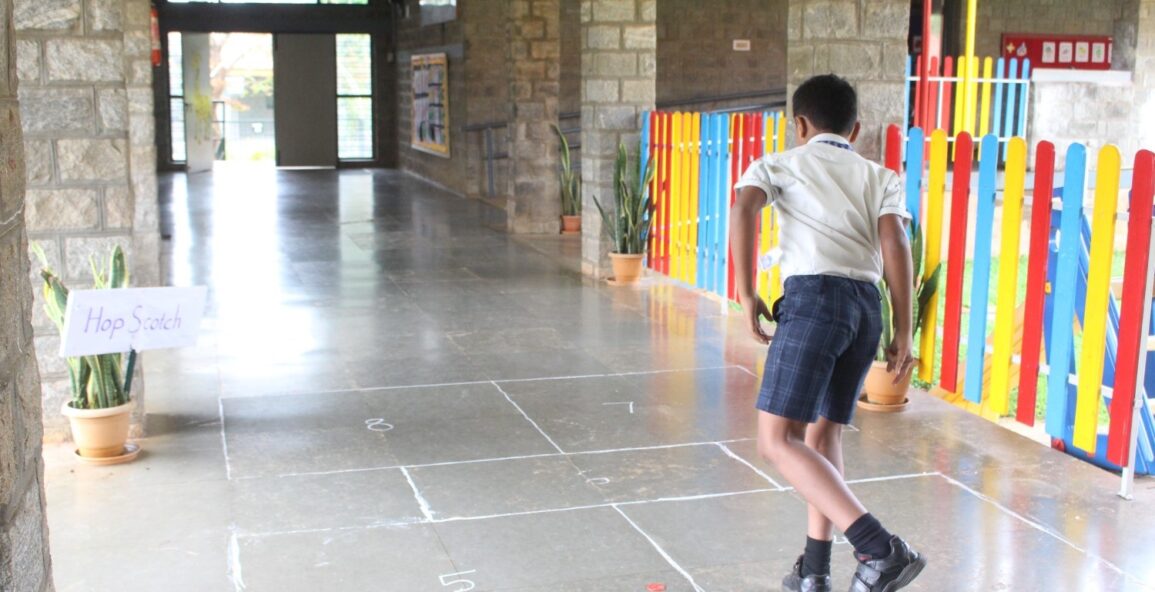
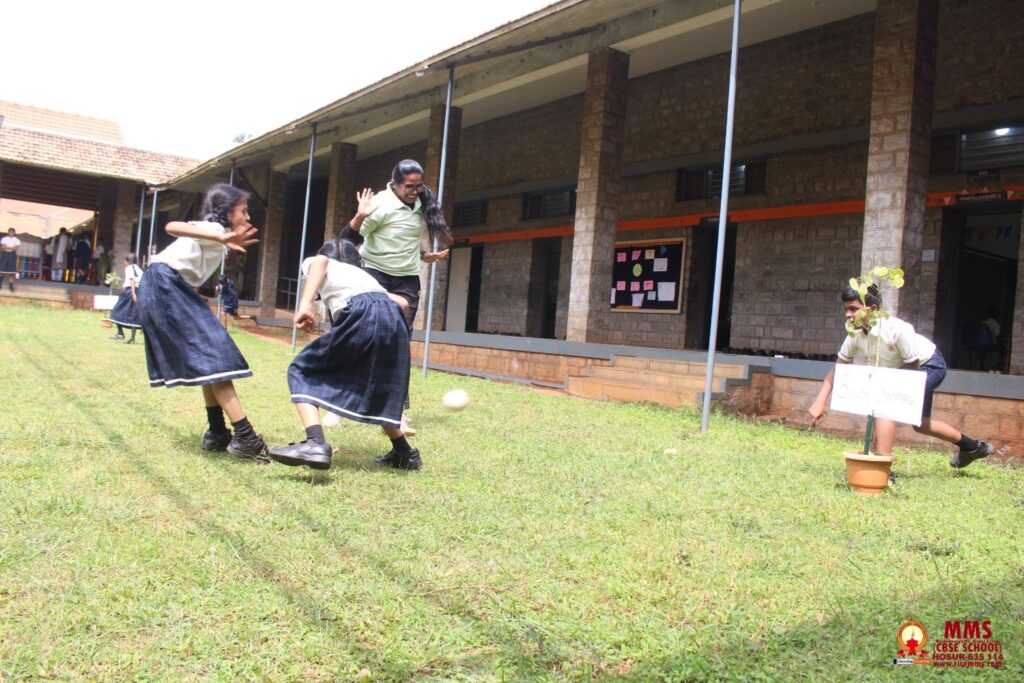
A few days ago, our Grade 4 children lived exactly this kind of learning-rich morning. What began as a simple outdoor session soon transformed into a celebration of childhood, culture, and care for the Earth. The playground, usually echoing with familiar modern games, came alive with calls from another time Kho-Kho, Kabaddi, Gilli Danda, Hopscotch, Seven Stones, and more. These were not just games; they were living pieces of India’s cultural heritage, passed down through generations and rediscovered by young hands and eager feet.
As teachers and coordinators observed, something beautiful unfolded. Children who typically sit at desks solving worksheets were now sprinting across open ground, calculating angles to strike a Gilli, balancing on one foot longer than they thought possible, and most importantly learning to work as a team. With every round, coordination, balance, agility, strategic thinking, and communication grew stronger. Yet the deepest learning went beyond physical skills. In the way children helped a fallen friend stand up, applauded an opponent’s clever move, and negotiated rules fairly, empathy, sportsmanship, and kindness took root naturally.
This session was never intended to be only a physical education class. From the planning stage itself, it was designed as an Integrated Learning Experience, bringing together Physical Education, Environmental Science, and Cultural Studies. Before stepping onto the field, students discussed the environmental cost of plastic toys and battery-operated gadgets. They explored how outdoor play creates almost zero waste, relies on human energy rather than electricity, and turns trees and open spaces into living classrooms instead of concrete walls and air-conditioned rooms.
With this understanding, the children were given a challenge: create your own game equipment using only recycled or natural materials available around the school. What followed was pure creativity. Old cardboard became targets for Seven Stones. Broken broom handles were transformed into sturdy Gillis. Empty plastic bottles filled with pebbles became markers for Hopscotch grids, while fabric scraps turned into flags for Kho-Kho zones. Nothing was purchased, nothing was wasted, and everything was proudly used. Through this simple act of making and playing, students experienced the full cycle of sustainability reduce, reuse, recycle without a single lecture or slide presentation.
During reflection circles later, their thoughts flowed naturally:
“I loved playing traditional games like Gilli Danda, Hopscotch, and Seven Stones. I never knew it was such good exercise too! My legs are tired, but in a happy way.”
— Chaaruhaas Gowda B
“I liked learning about the connection between games and environmental science. It felt like two subjects in one activity and much more fun than reading chapters separately!”
— Hruthvi Shan
“I never knew playing outside could be so much fun and good for the Earth too! I’m going to ask my parents if we can play these games in the park every weekend.”
— Hanu Mithra V P
Another child quietly reflected,
“When we made our own toys from waste material, it felt like we were giving those things a second life just like we are giving old games a second life by playing them again.”
Moments like these remind us why we choose experiential, integrated learning over rote methods. Children understand complex ideas such as conservation, sustainability, and cultural preservation not because they are told to but because they live them.
At MM School, this approach is not an occasional event; it is woven into the fabric of our curriculum. From Grade 2 students growing vegetables to understand food cycles, to Grade 6 learners mapping local water bodies while studying geography and civic responsibility, and Grade 8 students designing low-cost solar lamps during science and social-impact lessons integration is our everyday practice. We believe subjects were divided only for administrative convenience; real-life learning is interconnected, and children deserve to experience it that way.
When play becomes the medium, barriers dissolve. Shy children find their voices while strategizing in Kabaddi. Learners who struggle with textbook science light up when they realize outdoor games need no electricity. Children who feel distant from their roots feel pride when they master games their grandparents once played.
In just one morning, our Grade 4 students absorbed lessons that will stay with them far beyond any examination:
- Pride in India’s rich play heritage
- Understanding sustainable living through direct experience
- The joy and health benefits of outdoor, screen-free play
- Values of teamwork, empathy, fairness, and resilience
- Confidence that comes from creating something useful with their own hands
As they packed away their handmade equipment promising to bring it back the following week the playground slowly quieted. But the learning continued. Many children taught these games to siblings and neighbours. Some began sorting waste more carefully, remembering how an old bottle became a treasured marker. A few even started planning “no-buy” birthday celebrations using recycled materials.
This is the quiet, lasting impact of integrated, experiential learning. When childhood, culture, and care for the Earth come together on an ordinary school day, something extraordinary happens. Children grow into responsible, rooted, creative, and joyful individuals without ever feeling the weight of being “taught a lesson.”
R Gagana Sri
MM School