Artificial Intelligence in Classrooms: How Mathakondapalli Model School (MMS), Hosur is Preparing Students for the Future
Introduction: The Rise of Artificial Intelligence in Education
Education is entering a new phase of transformation with the rapid growth of Artificial Intelligence (AI). Technologies such as ChatGPT, AI learning assistants, adaptive tutoring systems, and intelligent educational platforms are changing how students learn, how teachers teach, and how knowledge is accessed.
For generations, learning involved reading textbooks, writing notes, discussing with teachers, and exploring libraries to understand concepts. While this process required time and effort, it helped students develop critical thinking, analytical reasoning, and independent learning skills.
Today, however, a single prompt to an AI system can generate explanations, essays, summaries, and problem-solving strategies within seconds. While this makes learning more efficient, it also raises an important educational question:
If artificial intelligence provides the answers, are students still learning how to think?
At Mathakondapalli Model School (MMS), Hosur, we believe that AI should not replace thinking but enhance intellectual growth, creativity, and conceptual understanding among students.
Artificial Intelligence: A Tool, Not a Substitute for Learning
Artificial intelligence has enormous potential when used responsibly in education. AI-powered platforms can support students by:
- Explaining complex scientific or mathematical concepts in simpler ways
- Generating practice questions for revision
- Providing feedback on essays and language learning
- Helping students explore multiple perspectives on a topic
- Supporting students who hesitate to ask questions in the classroom
In many ways, AI can function like a personal academic assistant available 24/7.
However, there is also a risk of passive learning. When students copy answers generated by AI without analysing or understanding them, the learning process becomes superficial. Assignments may be completed quickly, but conceptual clarity may remain weak.
Therefore, modern education must focus on teaching students how to use AI intelligently rather than depend on it blindly.
Why AI Literacy is Essential for Students
Artificial intelligence is already transforming industries such as technology, medicine, engineering, research, finance, and communication. Students who are currently in school will enter a world where AI will be integrated into most professions.
For this reason, AI literacy has become an essential educational skill.
Students must learn:
- How AI systems generate responses
- How to evaluate the accuracy of AI-generated information
- How to verify answers through multiple sources
- How to use AI ethically and responsibly
Developing these skills ensures that students remain active thinkers rather than passive users of technology.
The Role of Teachers in the AI Era
Despite the growing presence of AI tools, teachers remain the most important part of education.
AI can assist in generating lesson ideas, practice questions, or summaries. But effective teaching requires much more than information delivery. Teachers understand:
- The learning needs of individual students
- The emotional and psychological aspects of learning
- Curriculum standards and learning outcomes
- Classroom dynamics and engagement strategies
A lesson generated by AI becomes meaningful only when a teacher can interpret it, adapt it, and guide students through it effectively.
At Mathakondapalli Model School, we see AI as a supporting tool that strengthens teaching practices while preserving the central role of educators.
How Mathakondapalli Model School (MMS) is Integrating AI into Education
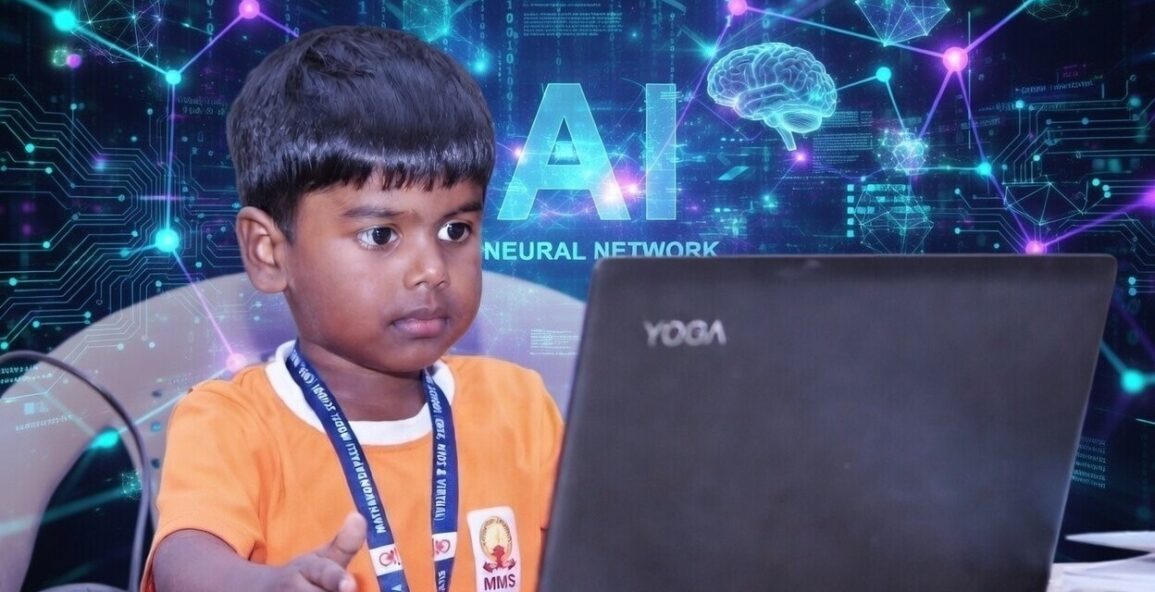
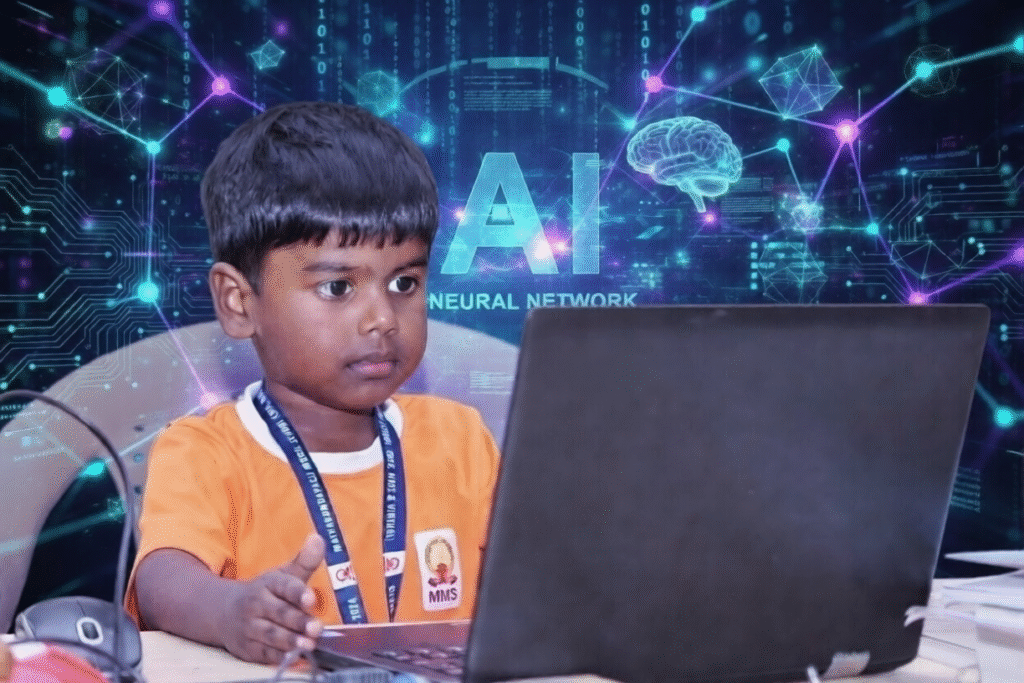
Mathakondapalli Model School, Hosur, has always focused on innovation in education, combining traditional academic values with modern learning methodologies. With the rise of artificial intelligence, MMS is preparing students and teachers for the AI-enabled future of education.
1. AI Awareness and Digital Literacy
Students at MMS are being introduced to the fundamentals of AI technology. This includes understanding:
- What artificial intelligence is
- How AI tools generate responses
- The limitations and possible errors in AI-generated information
- Responsible use of AI in academic work
This approach ensures that students use AI as a learning assistant rather than an answer-generating shortcut.
2. AI-Supported Conceptual Learning
Artificial intelligence can enhance learning by helping students explore concepts more deeply.
For example, students can use AI to:
- Clarify difficult concepts in science or mathematics
- Generate additional practice questions for revision
- Understand complex topics through simplified explanations
Teachers guide students in analysing these responses, ensuring that conceptual understanding remains the primary goal.
3. AI Integration in Project-Based Learning
Mathakondapalli Model School strongly emphasizes Project-Based Learning (PBL) and Experiential Learning, which encourage students to apply knowledge to real-world situations.
AI tools can assist students in:
- Gathering information for research projects
- Analysing patterns or data
- Exploring innovative solutions to real-world problems
However, the thinking, interpretation, and conclusions must always come from the students themselves.
4. Teacher Training in AI-Assisted Teaching
To ensure responsible AI integration, MMS focuses on teacher capacity building.
Teachers receive guidance on:
- Using AI tools for lesson planning
- Designing AI-assisted classroom activities
- Maintaining academic integrity in student assignments
- Encouraging critical evaluation of AI-generated content
This ensures that technology enhances pedagogical effectiveness rather than weakening academic standards.
5. Ethical and Responsible AI Usage
One of the most important aspects of AI education is ethical awareness.
Students at MMS are encouraged to practice:
- Academic honesty in assignments
- Proper citation and referencing
- Responsible use of digital information
- Awareness of misinformation and AI limitations
By emphasizing ethics and responsibility, MMS ensures that students develop digital maturity alongside technological skills.
Balancing Technology and Human Thinking
Artificial intelligence offers incredible possibilities, but education must maintain a balance between technology and human reasoning.
Students must continue to develop essential intellectual abilities such as:
- Critical thinking
- Logical reasoning
- Creativity and imagination
- Independent research skills
- Problem-solving abilities
Technology should support these skills rather than replace them.
Preparing Students for the Future
The future workforce will require individuals who can collaborate with intelligent systems while maintaining strong human reasoning abilities.
At Mathakondapalli Model School, the goal is to prepare students who are:
- Digitally literate
- Conceptually strong
- Creatively confident
- Ethically responsible
- Technologically aware
By integrating artificial intelligence responsibly into education, MMS aims to ensure that students are ready for the knowledge-driven world of the future.
Conclusion: The Future of AI and Education
Artificial intelligence is already part of modern education, and its influence will continue to grow. The real challenge for schools is not whether AI should be used, but how it should be used wisely.
When guided properly, AI can expand learning opportunities, support struggling learners, and enhance teaching methods.
At Mathakondapalli Model School (MMS), Hosur, we believe that the future of education lies in a thoughtful partnership between human intelligence and artificial intelligence.
Technology will continue to evolve, but the true purpose of education will always remain the same to help children think, question, understand, and contribute meaningfully to the world.
ERTDU