CBSE Curriculum Changes 2025–26: How Mathakondapalli Model School Aligns with NEP 2020 for Future-Ready Education
Introduction: Transforming Education for the Future
The Indian education system is witnessing a significant transformation under the guidance of the National Education Policy (#NEP2020), with the Central Board of Secondary Education (#CBSEcurriculumchanges2025) implementing progressive reforms in curriculum and assessment. These reforms shift the focus from rote memorisation to conceptual understanding, skill development, and holistic growth. At Mathakondapalli Model School (#MMSHosur), ranked among the #bestCBSEschoolinHosur, we have aligned our academic framework with CBSE reforms and NEP 2020 to build a future-ready, student-centric learning ecosystem. Our approach integrates #competencybasededucationIndia, experiential learning, and data-driven academic monitoring, ensuring every child receives meaningful and relevant learning experiences in #educationinHosur.
CBSE Curriculum Changes 2025–26: Key Highlights
1. Flexible Mathematics Pathways in Class X
CBSE continues to provide flexibility through two Mathematics options Basic Mathematics (Code 241), suitable for students not pursuing Mathematics-intensive careers, and Standard Mathematics (Code 041), required for higher studies in Science, Engineering, and related fields. This allows students to choose based on interest, aptitude, and future aspirations, reducing academic pressure and improving learning outcomes. At MMS, continuous academic tracking, performance analysis, and personalised counselling ensure each learner selects the most appropriate pathway, reflecting NEP 2020’s emphasis on student choice and flexibility.
2. Competency-Based Learning Across Subjects
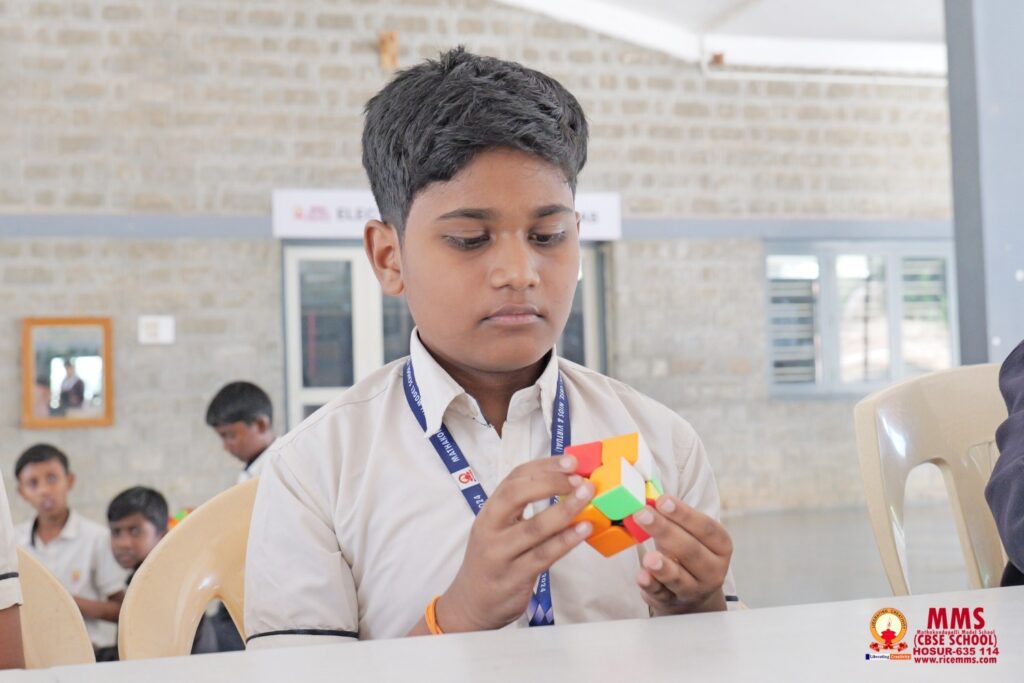
One of the most important CBSE reforms is the shift towards #competencybasedassessmentpattern. This approach focuses on application of knowledge, analytical and critical thinking, real-world problem solving, and conceptual clarity. In subjects such as Science and Social Science, students engage in experiential and inquiry-based processes. At MMS, this transformation is practised through Project-Based Learning, Experiential Learning, and interdisciplinary teaching strategies — where students design experiments, conduct field studies, analyse data, and present findings, making learning active and deeply rooted in understanding.
3. Assessment Reforms: A Continuous and Comprehensive Approach
CBSE maintains the structure of 80% Board Examination (Theory) and 20% Internal Assessment. Internal assessment now includes periodic tests, subject enrichment activities, projects, assignments, and practical work — promoting continuous evaluation and reducing dependency on a single high-stakes examination. At MMS, assessment is a learning tool that is competency-based, outcome-oriented, aligned with Bloom’s Taxonomy, and supported by data analytics. Structured academic dashboards enable teachers to provide timely interventions and personalised support for every student, featuring a #holisticprogresscard approach.
4. Skill-Based Education and 21st-Century Competencies
In alignment with NEP 2020, CBSE promotes skill-based education covering Artificial Intelligence, Coding and Robotics, Digital Literacy, and Vocational Skills. At MMS, these elements are integrated into our academic ecosystem, building essential 21st-century competencies — creativity and innovation, critical thinking and problem-solving, communication and collaboration, and digital and technological literacy — ensuring students are academically strong, future-ready, and adaptable.
5. Holistic Progress Card (HPC): Redefining Student Evaluation
The Holistic Progress Card introduced under NEP 2020 evaluates students across the cognitive, affective, socio-emotional, and psychomotor domains in a single holistic framework. While HPC is currently implemented in foundational and preparatory stages, MMS extends its philosophy across all grade levels through an evaluation framework that includes academic achievement, co-scholastic activities (sports, arts, cultural participation), and behavioural and value-based indicators — ensuring a 360-degree understanding of each child beyond marks.
MMS Hosur: Leading NEP 2020 Implementation
At Mathakondapalli Model School, NEP 2020 is not merely adopted — it is operationalised through structured systems and research-driven practices. Through our Educational Research Training and Development Unit (ERTDU), we develop competency-based curriculum frameworks, conduct teacher capacity-building programmes, implement data-driven academic monitoring systems, integrate AI and technology into teaching and learning, and establish national and global academic collaborations. This positions MMS as an Academic Intelligence and Research Hub, bridging school education with advanced educational practices and global standards.
Real-World Impact at MMS
In the 2024–25 session, Grade 8 students applied AI concepts to design a sustainable water-conservation model that won the state-level innovation award, demonstrating how our competency-based approach translates classroom learning into tangible outcomes. Such achievements reflect the strength of our integrated curriculum, where theoretical knowledge meets practical application, and students are empowered to solve real-world problems with confidence and creativity.
The Role of Parents in a Changing Educational Landscape
The success of CBSE reforms and NEP 2020 depends on strong collaboration between schools and parents. At MMS, we view parents as active partners in the learning process — supporting project-based and experiential learning, helping students make informed subject choices, ensuring a balanced routine across academics, sports, arts, and well-being, and staying connected with teachers to monitor progress.
Why These Reforms Matter for Students
The CBSE curriculum changes aligned with NEP 2020 are designed to fundamentally improve how students learn. These reforms ensure students understand concepts deeply rather than memorising content, develop real-world skills and independent critical thinking, and build confidence, creativity, and adaptability for higher education, competitive examinations, and global career opportunities — while shaping them into responsible, value-driven individuals.
Conclusion: Building the Future at MMS
The CBSE curriculum reforms for 2025–26 mark a significant step towards holistic, competency-based, and future-oriented education. At Mathakondapalli Model School, Hosur, we are committed to implementing these reforms in their true spirit. Through data-driven systems, experiential learning, skill integration, and the #CBSEassessmentpattern and #holisticprogresscard framework, MMS creates a learning environment where every child can thrive. With the continued support of parents and the dedication of our educators, we are confident in nurturing future-ready learners who are academically strong, socially responsible, and globally competent.
Meru
The Secretary
RICE MMS