MMS Explores Collaboration with Adhiyamaan College of Engineering
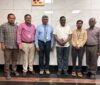
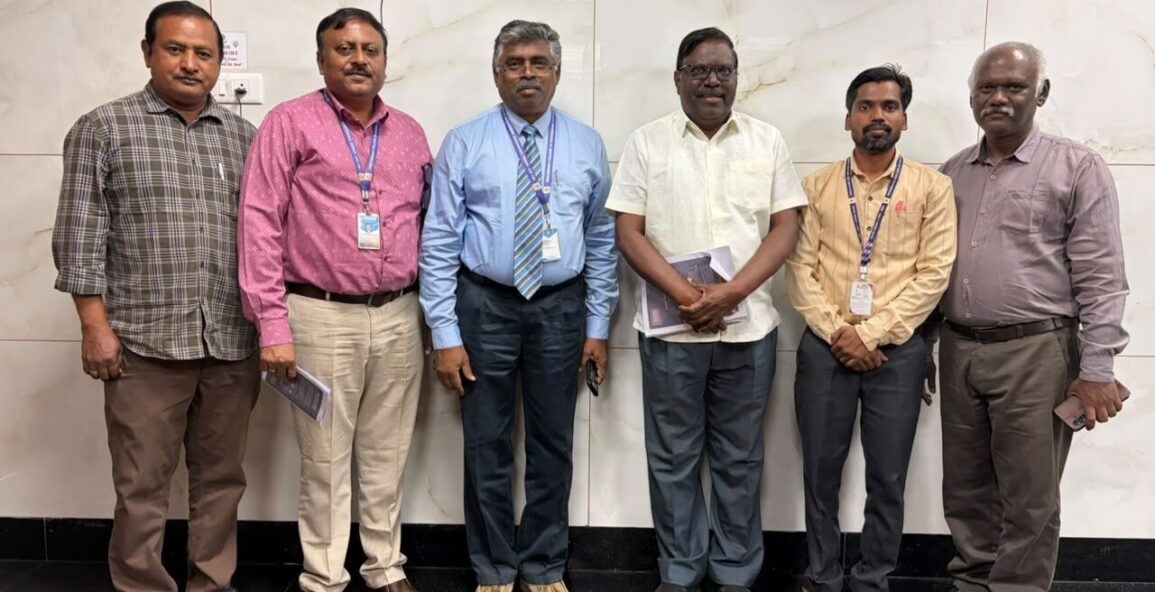
Recently, Mr. Meru M., Secretary, together with the Academic and Administration team of Mathakondapalli Model School (MMS), visited Adhiyamaan College of Engineering (ACE), Hosur. The team was hosted by Prof. Dr. R. Dhanasekaran, Dean (Industry Relations), and Principal Prof. Dr. R. Radhakrishnan. The discussion focused on innovation support, educational research, experiential learning, and knowledge sharing.
What could have remained a courteous institutional visit instead opened a larger possibility: a school and an engineering college in the same region choosing to think together about how children learn, how teachers grow, and how real-world problems can enter classrooms earlier and more honestly.
A conversation rooted in daily practice
At MMS, this conversation felt natural rather than novel. The school follows a 21st-century model centred on interdisciplinary learning, subject integration, project-based learning, experiential education, and a child-centric approach. Students are expected to design, build, test, fail, revise, and present. Teachers are expected to function as designers of learning rather than mere deliverers of content.
This is already visible on campus. Through the Centre of Excellence—including the Automobile, Electrical and Electronics, STEAM and Robotics laboratories—students work on functional prototypes, including e-vehicle and applied technology projects. Teachers guide them through scoping an idea, testing a prototype, documenting failure, and communicating findings. A conversation with an engineering college is valuable because it can deepen this practice, not invent it. At the heart of this work sits the Educational Research, Training and Development Unit (ERTDU). ERTDU develops, tests and refines educational models that can be adapted by other institutions. It aligns curriculum and assessment with NEP 2020 and NCF 2023, supports teachers in project-based and competency-based pedagogies, and treats professional development as continuous inquiry. When a school team visits an engineering college, it is therefore not merely seeking facilities or guest lectures. It is asking how the research culture of higher education can inform—and be informed by—the research culture already being built inside a school.
Why the timing matters
NEP 2020 emphasises the need to break silos—between subjects, between school and higher education, between academic and vocational pathways, and between institutions that have traditionally operated in isolation. A child who has spent years in project-based, interdisciplinary environments should not encounter a sudden discontinuity on entering an engineering or research setting. Conversely, a college that invests in innovation, incubation, patents and industry-linked projects has much to offer schools that already ask students to design prototypes and connect technology with real problems.
Areas of mutual interest
Four areas of shared interest emerged.
The first is experiential and interdisciplinary learning. Engineering colleges routinely work with materials, systems, constraints, and iterative design. Schools that practise project-based learning can benefit from structured exposure to these processes. Reciprocally, school-level projects often retain a freshness and social relevance that can enrich college thinking about education, outreach and inclusive innovation.
The second is research culture. ERTDU already treats teaching as inquiry: teachers design units, collect evidence of learning, refine rubrics, and share findings. An engineering college’s research ecosystem—its laboratories, faculty research groups, and experience with applied projects—can help a school deepen questions of measurement, documentation, ethical use of technology, and the translation of classroom innovation into transferable models.
The third is teacher and student capacity. Knowledge sharing need not mean one-way transfer from college to school. MMS teachers who have guided students through complex, authentic projects bring pedagogical insight that higher-education faculty often value. College faculty and students, in turn, can mentor school teams, open laboratories for supervised visits, or co-design short modules that connect school curricula with contemporary scientific and engineering practice.
The fourth benefit is regional. Hosur and its surrounding areas form a growing industrial and educational landscape. When a CBSE school with a dedicated research unit and an established engineering college begin talking seriously about innovation support, they model an ecosystem in which local institutions take responsibility for the quality of learning before and after the school-leaving examination.
Next steps
None of this requires an immediate formal agreement to be valuable. The first and most important outcome of the visit was the exchange of ideas and the recognition of shared intent. Mr. Meru M. noted that the interaction enabled the team to exchange valuable insights and areas of mutual interest, and that both sides look forward to a meaningful and mutually beneficial association. That language is careful and accurate. Collaboration of this kind succeeds when it remains grounded in the actual strengths of each partner: MMS’s child-centric, research-informed school practice, and ACE’s engineering, innovation and research infrastructure. For ERTDU, the visit is also a reminder of its purpose. The unit exists not only to improve practice on one campus but to develop models that other institutions can adapt. Partnerships with higher-education institutions test those models against a different set of constraints. They force greater precision about what “innovation support” means in a school context—mentorship, joint documentation of projects, shared professional development, or pathways from school-level inquiry to more specialised research.
The larger educational question remains simple. How do we ensure that the curiosity, collaboration and problem-solving we claim to value in children are not interrupted by the structures we have inherited? School–college conversations of this kind are one practical answer. They do not replace the daily work of classrooms, laboratories and teacher meetings. They do, however, enlarge the horizon of that work.
MMS remains grateful to Prof. Dr. R. Dhanasekaran, Principal Prof. Dr. R. Radhakrishnan, and the Adhiyamaan College of Engineering community for the warmth of the welcome and the seriousness of the discussion. The next steps will be worked out in the ordinary way of institutions that respect each other’s autonomy: through further conversation, small joint experiments, and a willingness to learn from what actually happens when school and college people sit at the same table. That, more than any announcement, is how educational innovation usually begins.
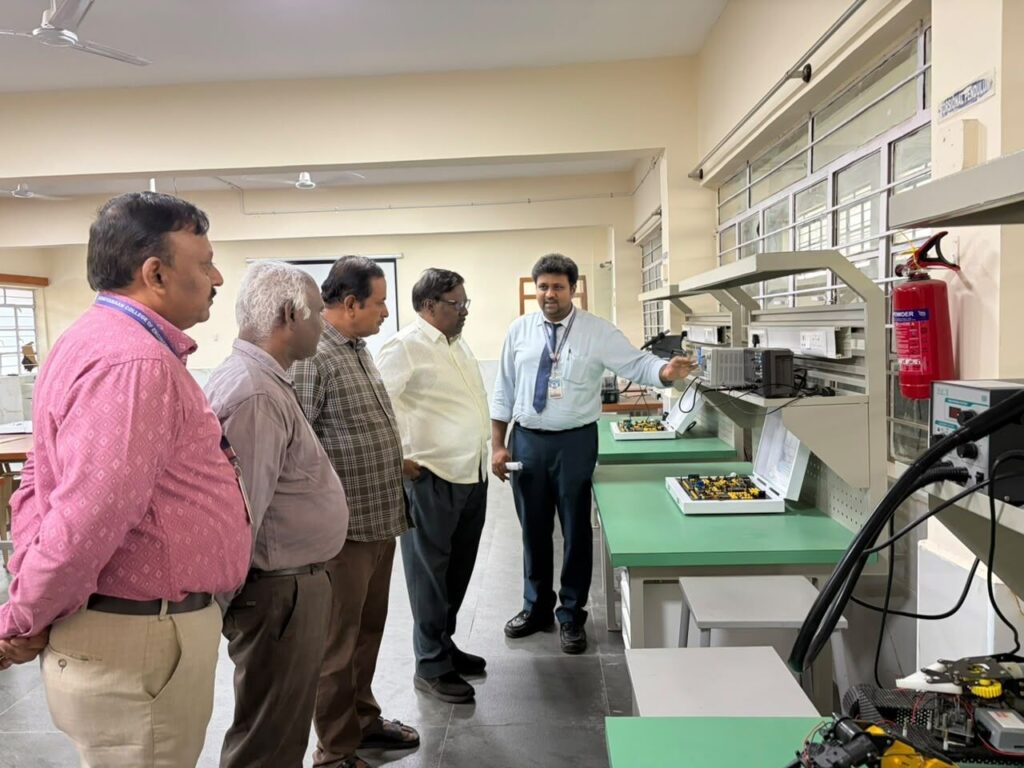
ERTDU-MMS