
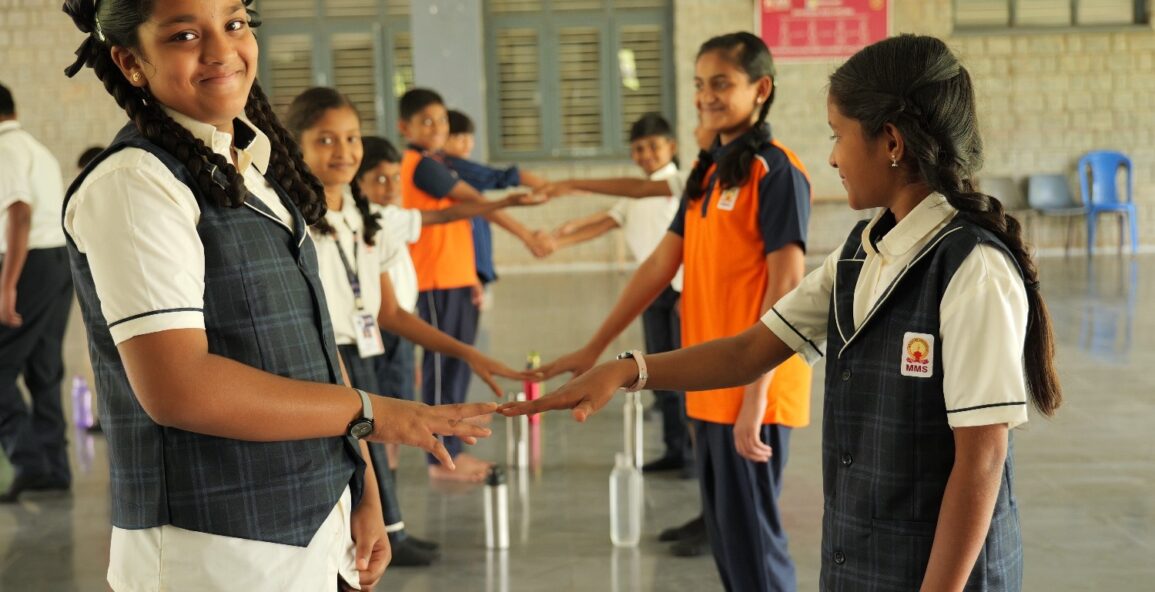
A Heart-Warming Act of Friendship: When Children Teach Us the Meaning of Caring
In schools, we often speak about academic progress, discipline, and achievements. But beyond marks and medals, some moments stand out because they remind us of what truly matters in education: the shaping of compassionate human beings. As teachers, we are privileged to witness small but powerful expressions of kindness every day. These moments often go unnoticed, but they leave a lasting impact.
In a world that moves fast, where even adults struggle to pause and listen to one another, children surprise us with their pure intentions. They show us how simple acts, done with a genuine heart, can brighten someone’s day. This is why social-emotional learning is just as important as academic learning.
Dear readers, this is Ms. Abharna M, Facilitator of Mathematics, MMS, sharing this proud and heart-warming moment with you all because some stories deserve to be told, remembered, and celebrated.
The Incident That Touched My Heart
Last year (2024–25), I witnessed a beautiful moment in my Grade 5 classroom, one that reminded me how deeply children understand friendship. It was not a grand gesture, not something planned or expected. It was a simple act, born out of innocence and affection, that reflected how children value relationships in their own quiet and sincere ways.
It happened on the occasion of a student’s birthday. A few friends gathered around and, in a playful tone, asked what gift was expected on this special day. Laughing along with them, the birthday student jokingly responded that they wanted a washing machine as a present. It was obvious that this was only teasing and not meant seriously.
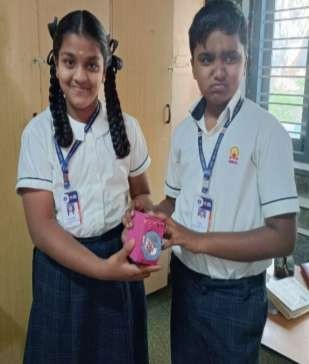
But what none of us expected was the way one classmate quietly absorbed that moment. Even though this classmate knew it was only a joke, something about that light-hearted conversation touched them. They took those words to heart, not because of a misunderstanding, but because they wanted to bring a smile to their friend’s face.
The very next day, this thoughtful student walked up to their friend with a small gift. It was a tiny, beautifully made model of a washing machine.
The joy on the birthday student’s face was unforgettable. It wasn’t about the object itself; it was the thought behind it. In that moment, the whole class witnessed the true meaning of friendship and compassion. This gesture of kindness spoke louder than any expensive present could.
Beyond One Moment: A Pattern of Care
What made this incident even more special for me was that it wasn’t a one-time expression of care. From the day I joined MMS until today, I have witnessed this student’s consistent support, concern, and genuine affection towards their classmate. They have always been a gentle, responsible presence, whether it is helping during class activities, ensuring understanding of instructions, checking in during group work, or being there when reassurance is needed.
This student has shown a natural sense of empathy, a crucial emotional intelligence skill. They don’t do it for attention, praise, or recognition. They do it because they truly care. And that, in itself, is a powerful lesson for every adult.
As teachers, we speak often about character education: kindness, support, cooperation, empathy. We encourage students to practise them, but here was a real-life example unfolding naturally in the classroom. I realized once again that children do not need long lectures or elaborate lessons to learn kindness. They simply need opportunities to express it.
What This Teaches Us About Empathy
This thoughtful gesture reveals something essential about fostering emotional intelligence in schools: kindness does not have to be big, expensive, or dramatic. Children naturally demonstrate that affection does not depend on money, that a thoughtful action can brighten someone’s entire day, and that true friendship often shows itself through the smallest deeds.
While adults tend to overthink, hesitate, or worry about how others perceive them, children simply act from the heart. They notice emotions, they listen deeply, and they respond with sincerity, all core components of social-emotional learning.
Children learn empathy in three powerful ways: by observing acts of kindness in their environment, by experiencing empathy directed toward them, and by participating in caring relationships. When they witness acts of kindness, they internalize them. When they are treated with empathy, they begin to practise it. When they experience genuine friendship, they learn to value people deeply.
Creating Spaces for Compassion
As a facilitator, I felt an immense sense of pride that day. It reminded me that the greatest lessons often come from the children we teach. Their hearts are open. Their intentions are pure. Their friendships are sincere.
These students reminded all of us that friendship is not about big gestures; it is about thoughtful moments, about listening when someone speaks, and offering kindness simply because you care. Children teach us every single day that the world becomes a gentler place when we choose to be thoughtful.
To all parents and educators reading this, let us continue to create spaces where children feel seen, heard, and valued. Every child carries a world of kindness within them waiting for the right moment to shine. When we encourage empathy at home and in school, we are not just teaching them to be good students; we are guiding them to become compassionate human beings with strong emotional intelligence.
Let us work together to nurture gentle hearts, thoughtful relationships, and classrooms filled with care. After all, when children grow in an environment of love and understanding through effective social-emotional learning, they naturally learn to spread it to others, creating a ripple effect of kindness that extends far beyond the classroom walls.
Abharna M
Dept of Mathematics