Learning by Leading: How a Classroom Parliament Transformed Grade 8 Learning at MMS
Introduction
“Tell me and I forget. Teach me and I may remember. Involve me and I learn.” This well-known quote, often attributed to Benjamin Franklin, captures the spirit of active learning and student engagement that unfolds every day in Grade 8 at Mathakondapalli Model School (MMS). Here, learning does not remain confined to textbooks or examinations. Instead, it is experienced, lived and practised through a thoughtfully designed Classroom Parliament that places students at the heart of decision-making.
Inspired by the vision of the National Education Policy (NEP) 2020 and the National Curriculum Framework (NCF) 2023, the Class Parliament was introduced to nurture student agency, leadership development, responsibility and democratic values. What emerged was not merely a classroom management strategy, but a vibrant culture of participation where students began to see themselves as leaders, collaborators and responsible citizens.
The Idea Behind the Class Parliament
The student-led parliament was conceptualised on a simple yet powerful belief: when students are trusted with real responsibility, they rise to the occasion. Rather than being passive recipients of instructions, students are given meaningful roles and a voice in shaping their democratic classroom environment. This approach aligns strongly with experiential learning theories, particularly those proposed by John Dewey and David Kolb, which emphasise learning through action, reflection and experience.
In Grade 8, the classroom gradually evolved into a small democratic learning community. Students did not merely learn about democracy; they experienced its principles through discussion, debate, cooperation and accountability key components of 21st-century skills development.
Structure of the Classroom Parliament
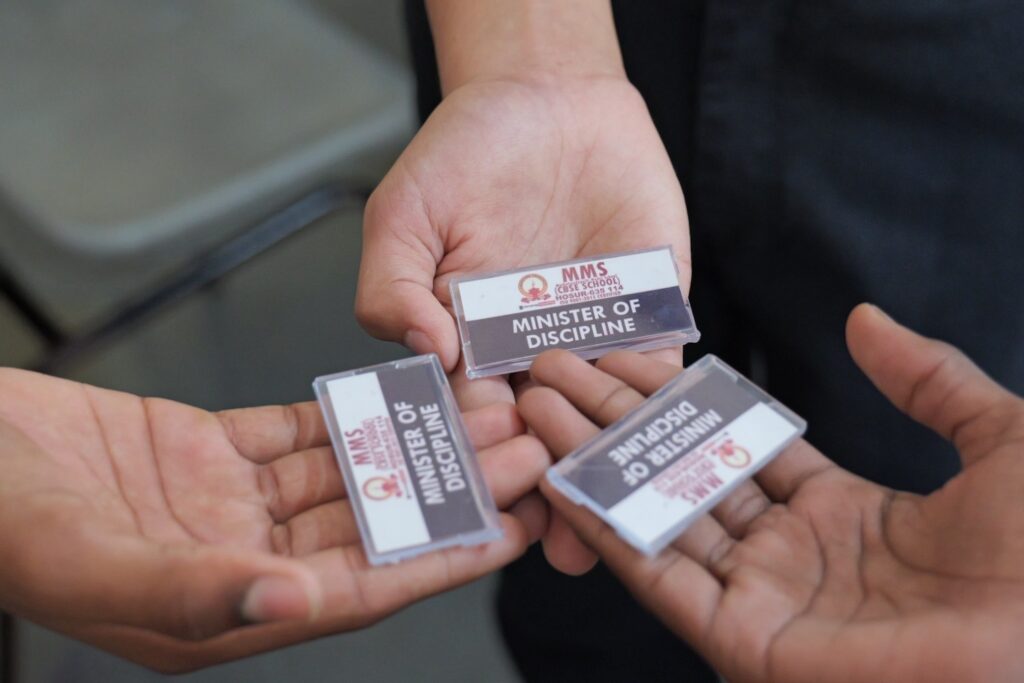
To ensure clarity and inclusivity, the Class Parliament model was organised into student-led ministries, each with specific responsibilities:
- Education Ministry: Supports academic routines, manages the classroom library, promotes reading habits and encourages peer learning strategies.
- Discipline and Order Ministry: Ensures orderly movement, supports positive behaviour and helps maintain a respectful learning environment.
- Health Ministry: Promotes hygiene, healthy habits and general well-being among classmates.
- Environment Ministry: Takes responsibility for cleanliness, classroom aesthetics and environmental awareness.
- Eagle Call Ministry: Serves as the central review and decision-making body, addressing major concerns, resolving conflicts and ensuring fairness.
Every student participates in at least one ministry, and roles are rotated periodically. This ensures that leadership opportunities are shared and that students understand governance as a collective responsibility rather than an individual privilege a core principle of inclusive education.
The Teacher’s Role: A Constitutional Guardian
An important feature of the democratic classroom model is the redefinition of the teacher’s facilitation role. Instead of functioning as a constant controller or decision-maker, the teacher assumes the position of a constitutional authority. Much like a guardian of democratic values, the teacher ensures that decisions remain fair, inclusive and aligned with the well-being of all students.
Student ministries exercise executive authority, while the teacher intervenes only when ethical boundaries, equity or student safety are at stake. This balance creates a safe yet empowering space where students experience genuine student autonomy within a clearly guided framework.
How Decisions Are Made: The Legislative Process
To help students understand how democratic systems function, the Classroom Parliament follows a simple legislative cycle that develops critical thinking skills:
- Raising Issues or Proposals: Ideas are brought forward by ministries or individual representatives.
- Discussion and Debate: Proposals are openly discussed, allowing students to express opinions and listen to diverse perspectives.
- Refinement: Suggestions and amendments are incorporated to improve fairness and feasibility.
- Decision-Making: Proposals are approved through consensus or voting.
- Implementation: The concerned ministry puts the decision into action.
- Review: Outcomes are reflected upon and improved if needed.
This process helps students develop communication skills, problem-solving abilities and respect for democratic procedures essential elements of civic education.
A Classroom Example in Action
One meaningful example involved a proposal from the Environment Ministry to introduce a rotational classroom cleanliness schedule. The idea arose from concerns that responsibilities were not being shared equally. During discussion, students debated fairness, time constraints and practicality. After incorporating suggestions, the proposal was approved and implemented for a month.
The outcome was encouraging. Students demonstrated greater ownership of learning, conflicts reduced and awareness about cleanliness increased. More importantly, students experienced how collective decisions lead to shared responsibility and collaborative learning.
Mock Parliamentary Sessions: Learning Comes Alive
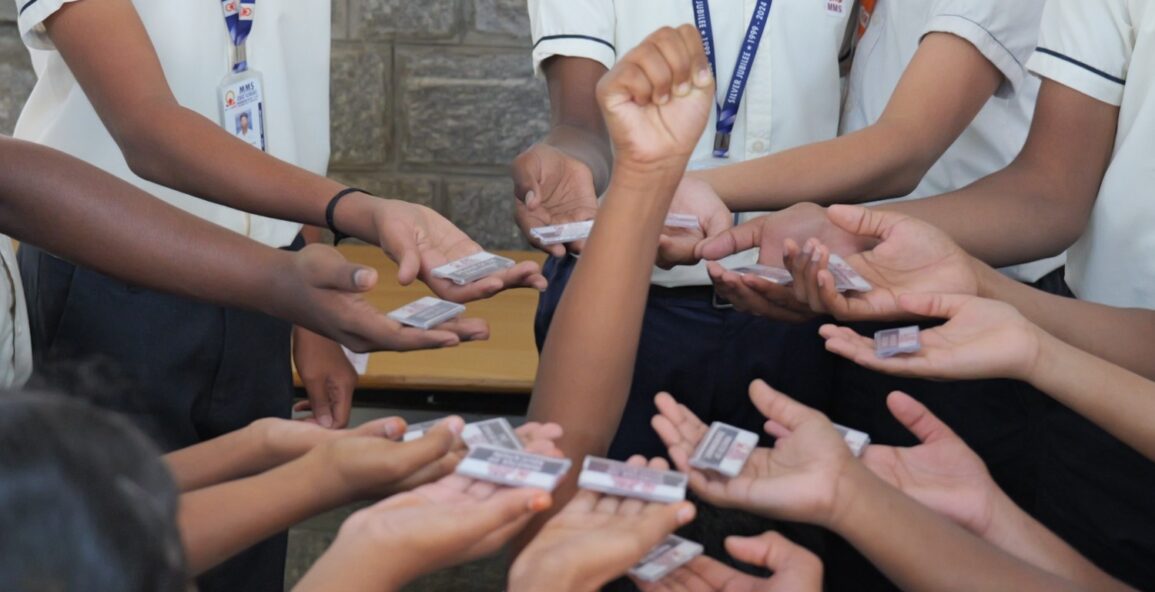
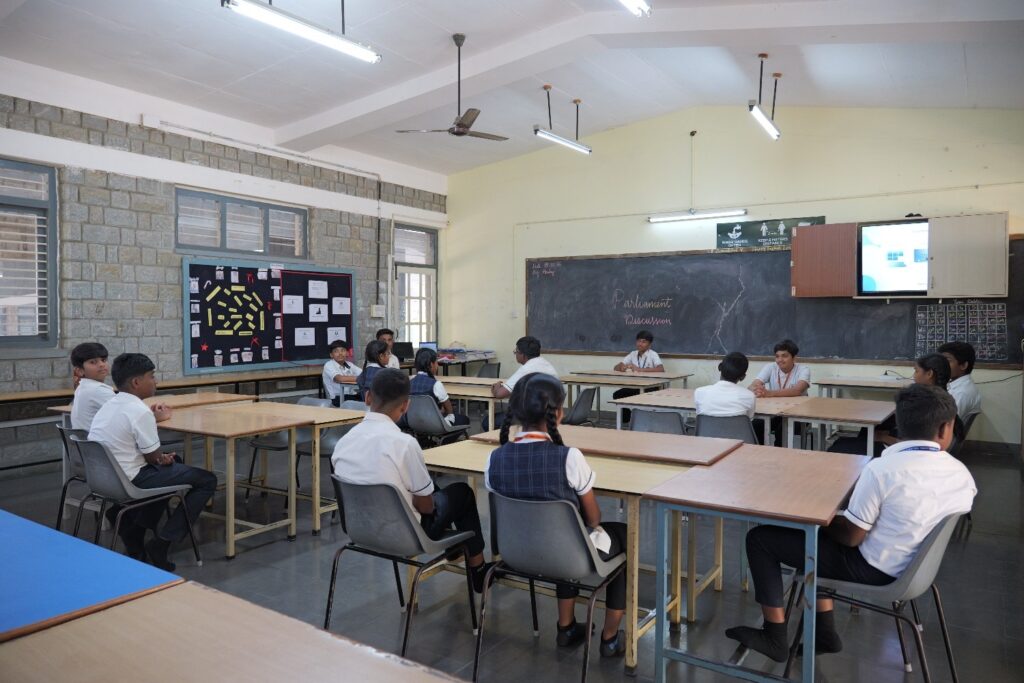
Mock parliamentary sessions are among the most eagerly anticipated activities in Grade 8. Students take on roles such as Speaker, Prime Minister, Ministers and Opposition Leaders. These sessions transform the classroom into a lively forum of ideas, arguments and solutions.
Through these simulation-based learning activities, students learn to articulate thoughts confidently, disagree respectfully and support arguments with reasoning. Many students who are usually quiet in traditional classrooms find their voice during these structured discussions, highlighting the inclusive nature of democratic learning practices.
Observed Impact on Students
Over time, several positive changes have been observed in this transformative education model:
- Increased responsibility and accountability in daily routines
- Improved communication and listening skills
- Greater empathy and respect for differing viewpoints
- Stronger sense of teamwork and cooperation
- A deeper understanding of leadership as service
- Enhanced social-emotional learning (SEL)
These outcomes reflect the goals of holistic education outlined in NEP 2020 and NCF 2023, where character development and life skills are valued alongside academic achievement.
Alignment with National Educational Vision
The Class Parliament serves as a practical example of how the ideals of NEP 2020 implementation and NCF 2023 guidelines can be translated into everyday classroom practice. By embedding experiential learning, student voice and democratic values into routine activities, this innovative teaching method bridges the gap between policy and practice. Civic education, in this context, becomes lived experience rather than abstract instruction.
Conclusion: Democracy as a Way of Learning
The Grade 8 Classroom Parliament at MMS demonstrates that when students are involved meaningfully through student-centered learning, education becomes deeper and more purposeful. By sharing responsibility, participating in governance and reflecting on outcomes, students develop skills and values that extend far beyond the classroom.
Shivraj
Dept of English